How to Date a Garment Without Breaking Its Heart
Your body knows before your brain catches up that's chemistry and honestly it's a lot more reliable with vintage than modern dating.
Dating apps feel like being made into a product you get swiped, sorted and discarded. As a Libra Venus I feel this deeply. I'm made for romance, meaning and something real.
Vintage is different. When you're thrifting, you're the one holding the power. You’re the consumer, not the consumed. Nothing filtered or optimized. Vintage shows up honest, flawed, worn in, maybe a little mysterious. It's the realest thing you'll touch all week.
So I made this guide because vintage deserves to be loved like art. I think good design is subversive, and that preserving history is radical.
I also believe that when you understand what you're holding, really understand it, you stop shopping on impulse and start falling in love with intention and purpose.
No algorithms, no second-guessing, just you, a garment, and chemistry that lasts.
Pam Stewart Bolero c. 1950s
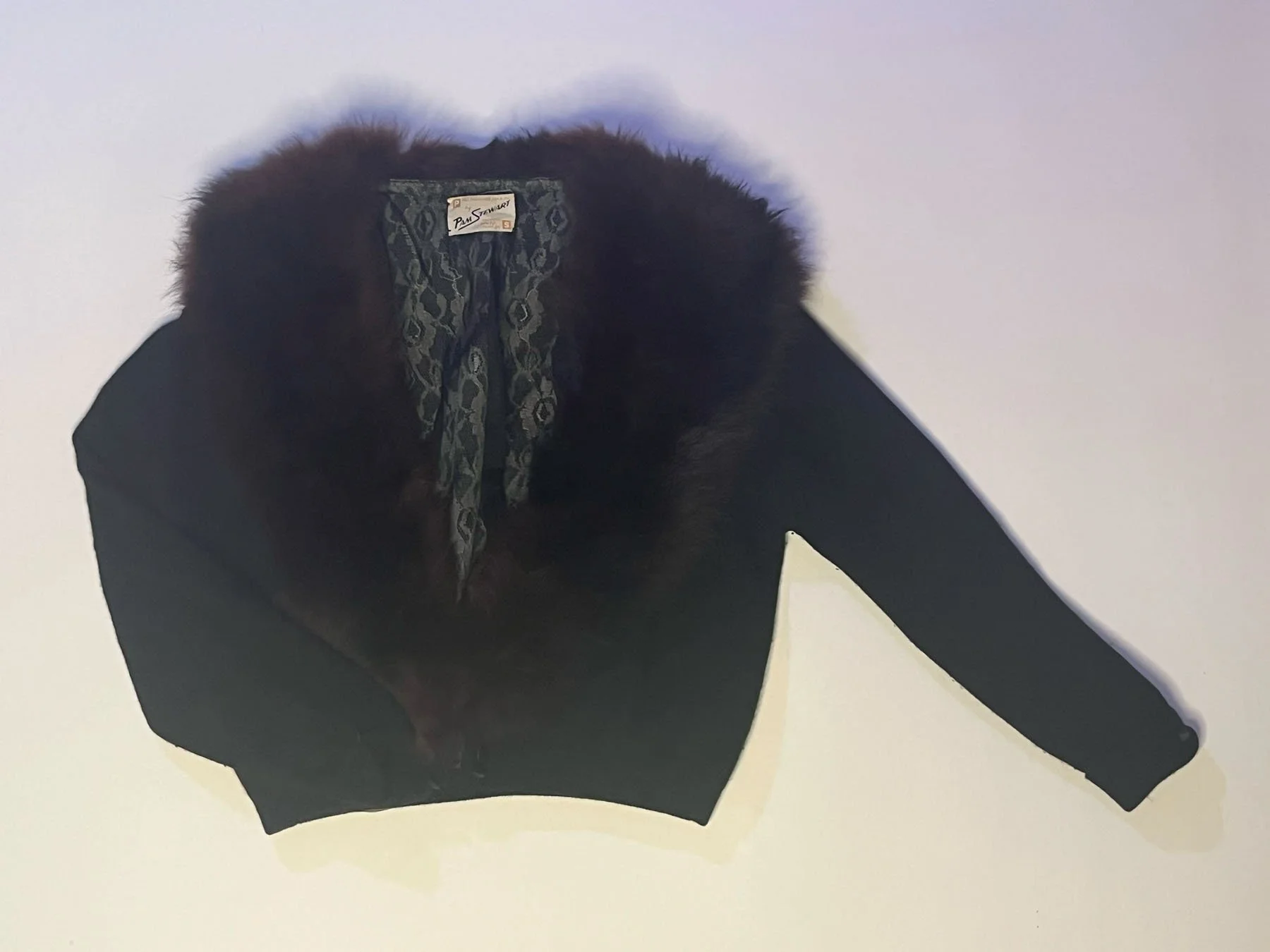
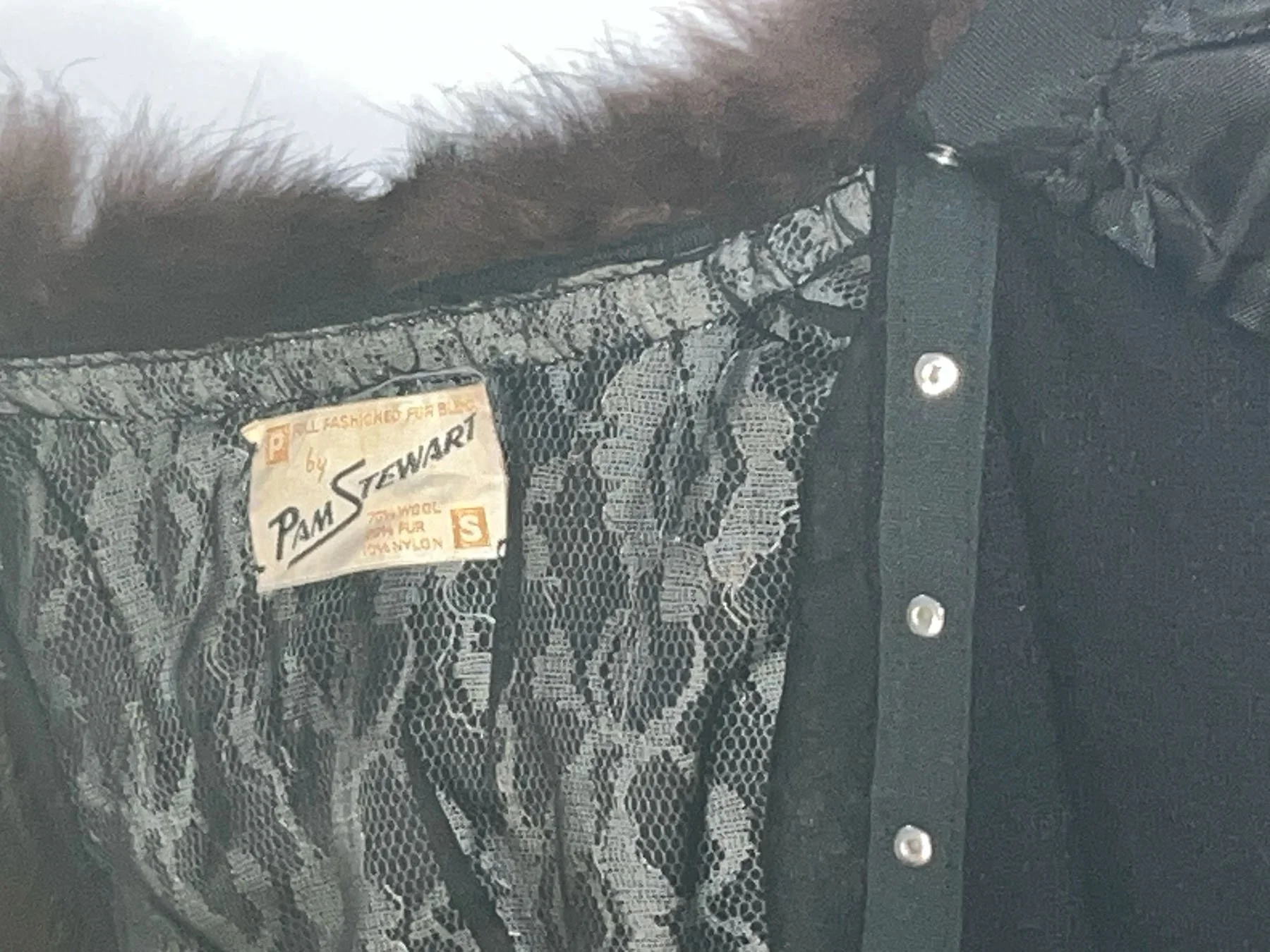
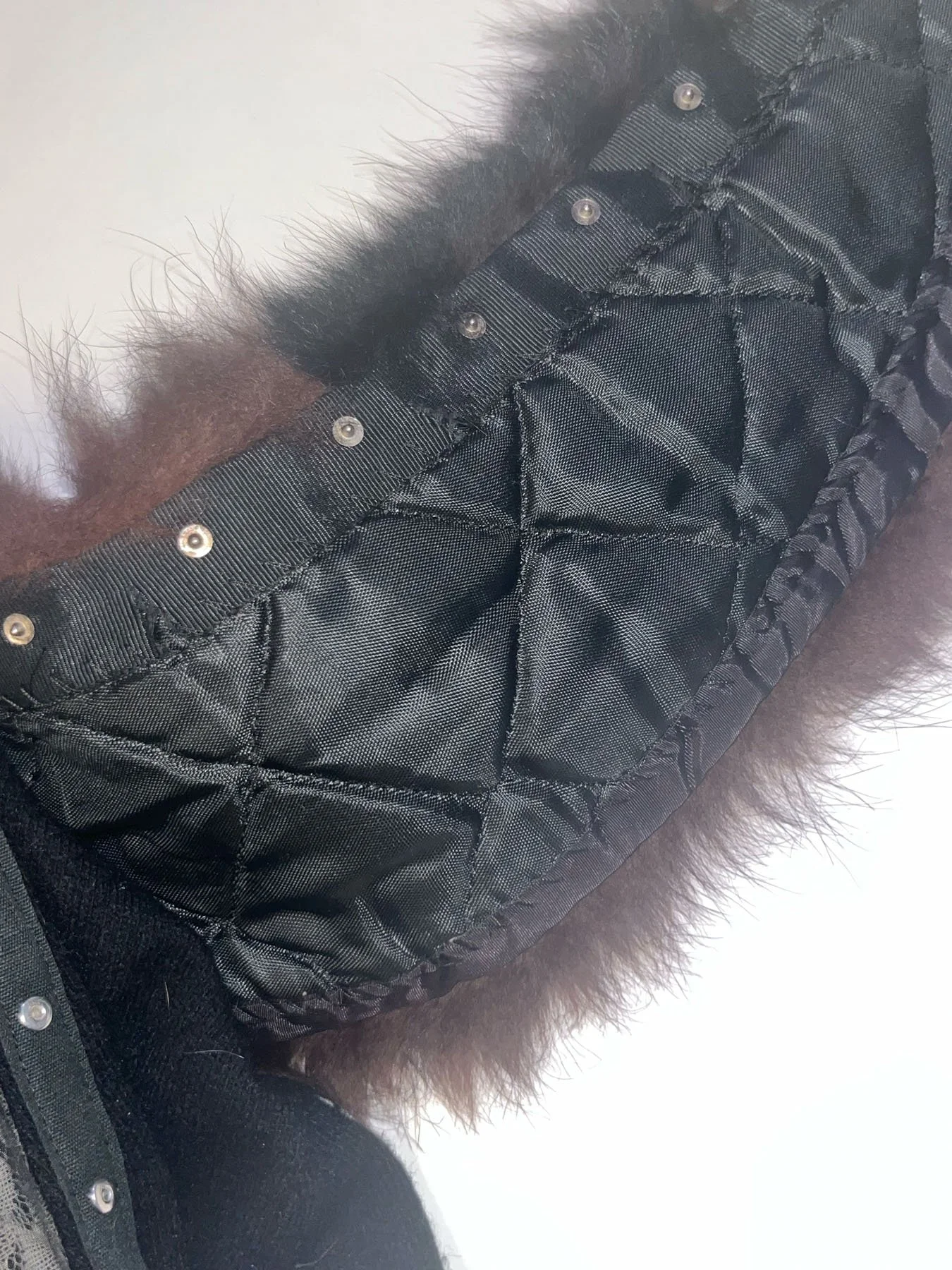
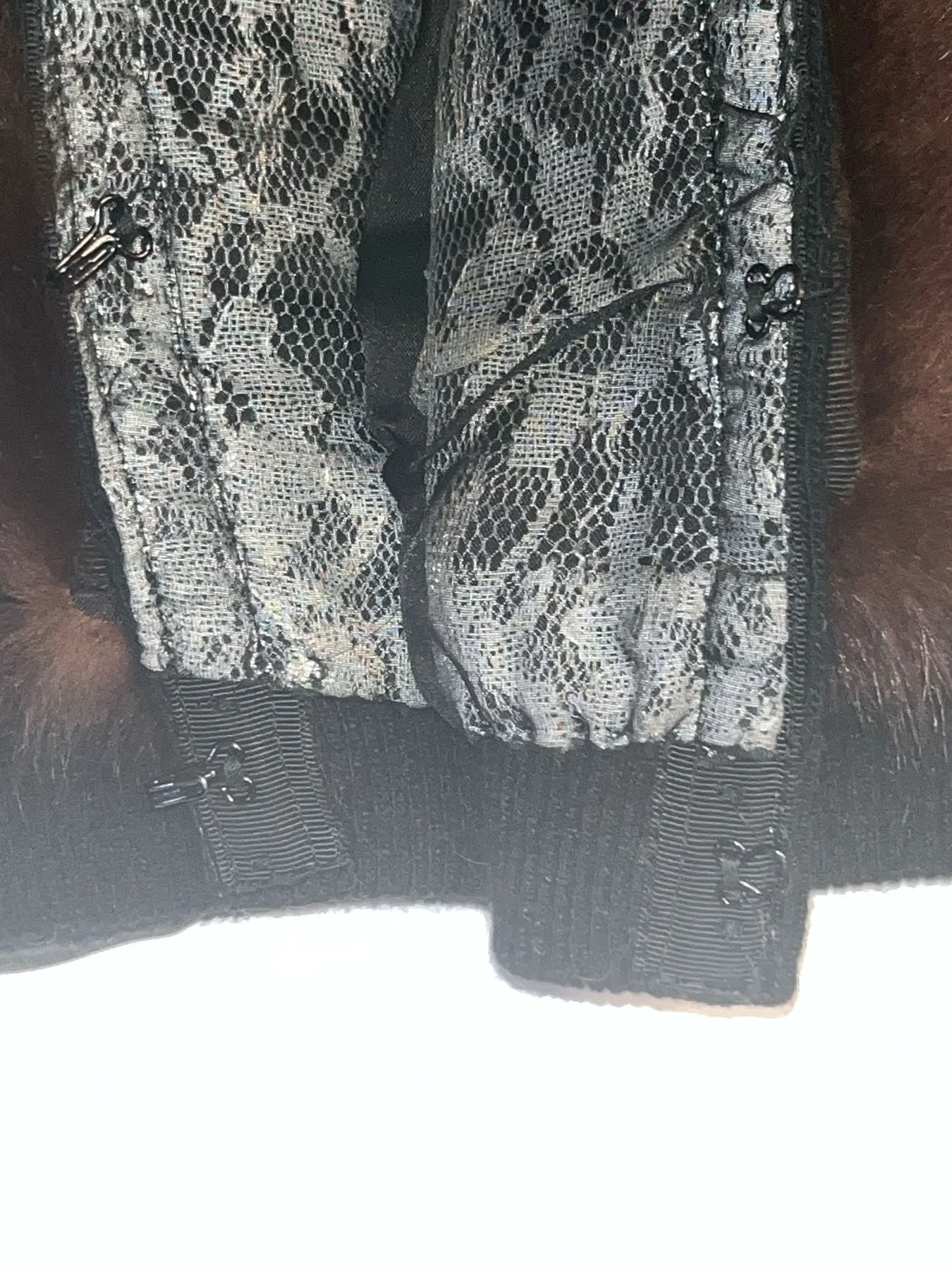
70% wool, 20% fur, 10% nylon. This gorgeous sweater has lace interior with mesh overlay. It’s so Marilyn to me. The fur-trimmed collar is completely removable quilted on the back, snaps on, it’s finished with nonfunctional satin buttons & metal hook closure (x2) on the front. The lace interior is your smoking gun for the 1950s. Hook closures and non-functional buttons and structure are era markers as well. I found this item at a swap meet in Hollywood.
Mardi Gras NYC dress c. 1950s
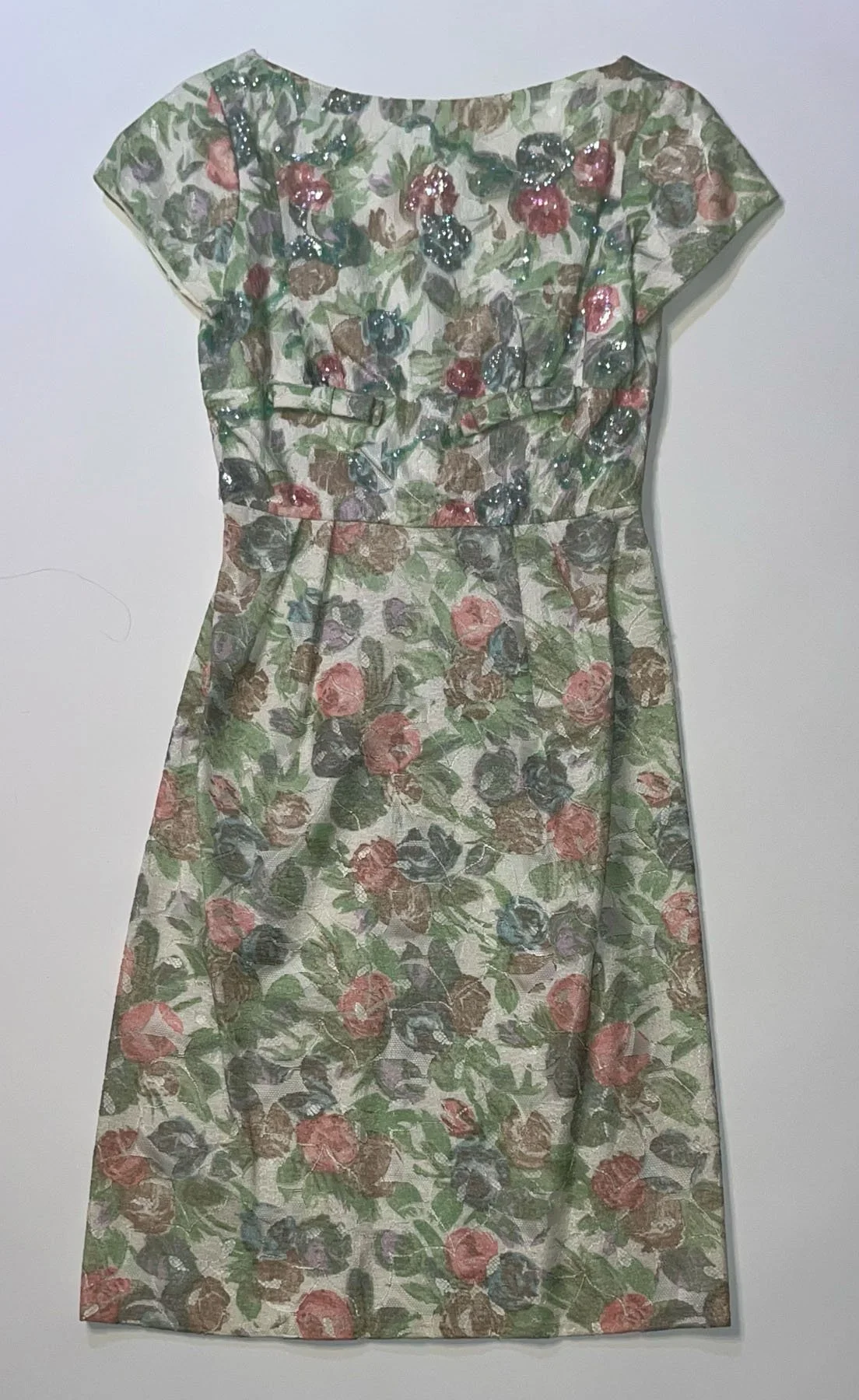
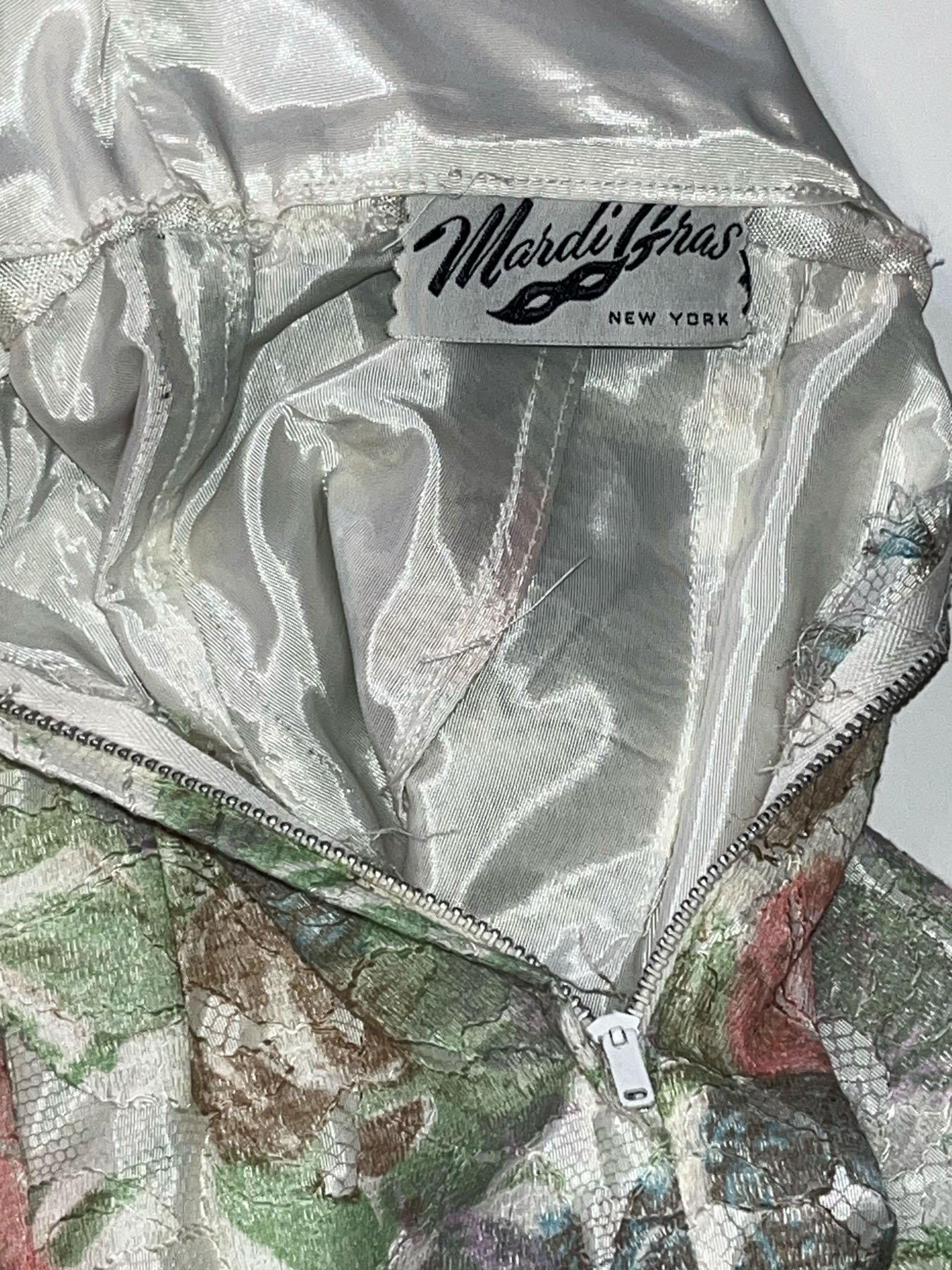
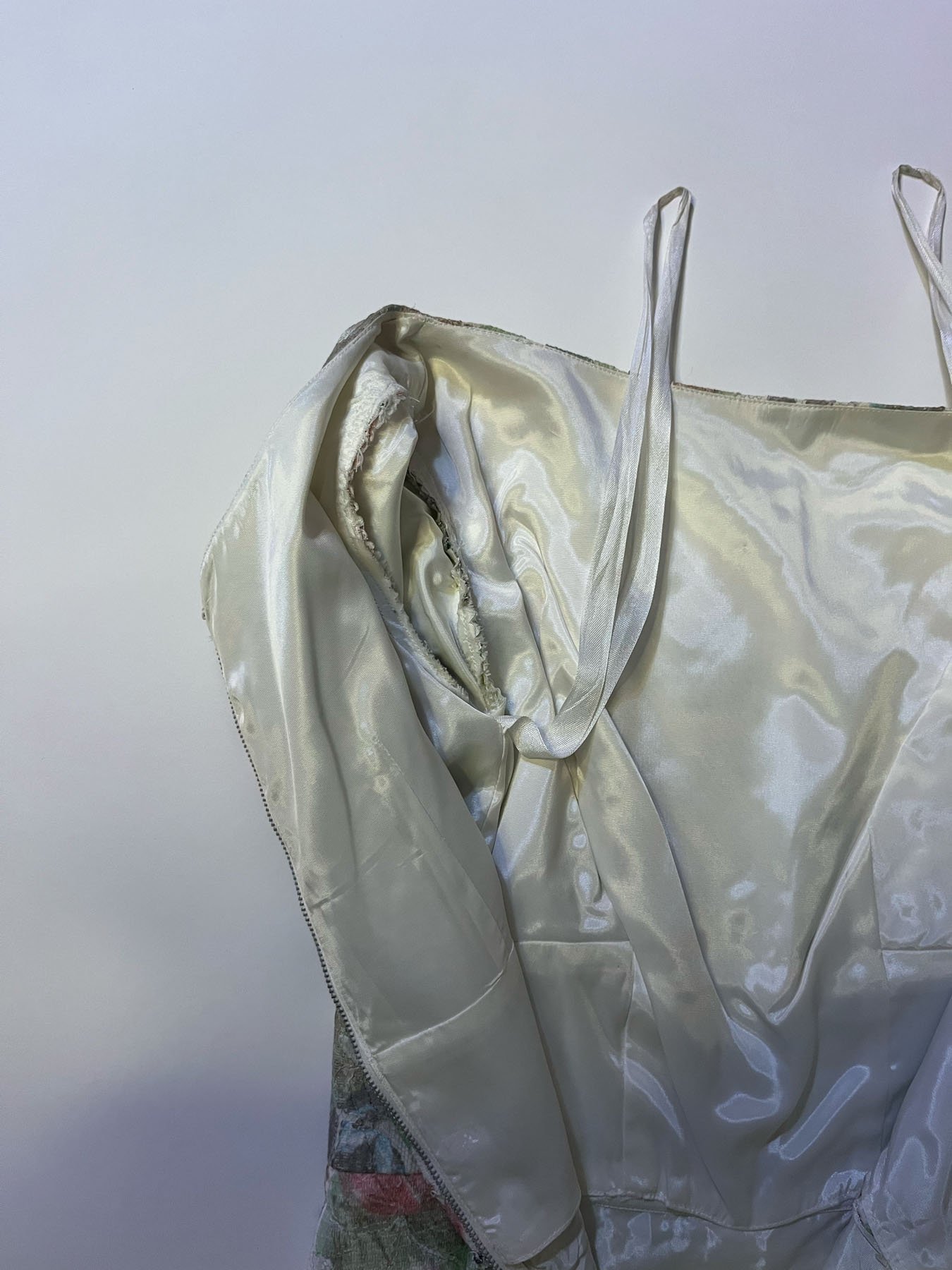
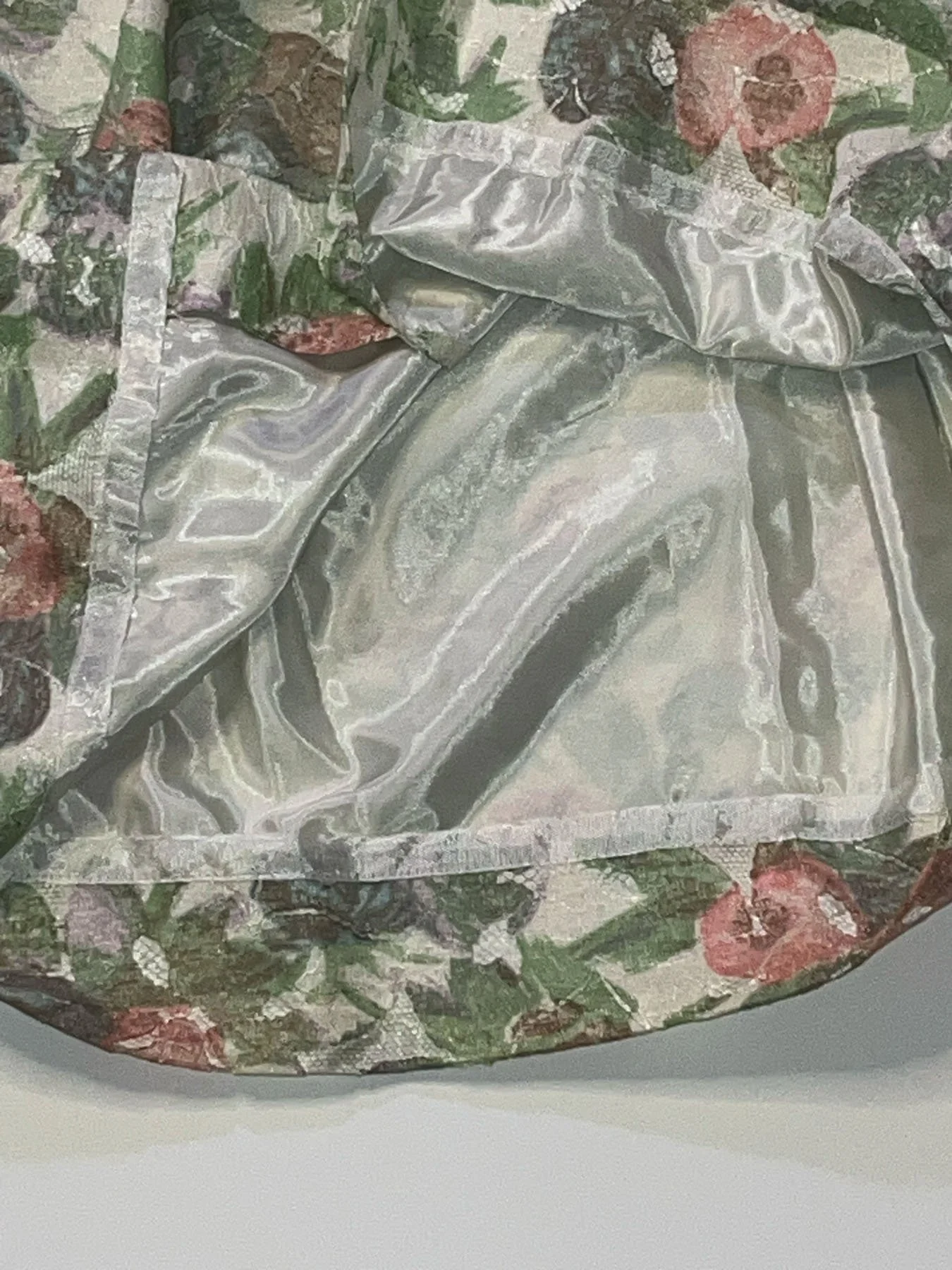
What to find: entirely hand-painted lace and sequined on the bust, decorative bows underneath each breast, metal zipper, Satin lining, the use of pinking shears, finished on the seams of the sleeves, and hanging straps inside for preservation.
Hand-painted lace dresses were designer items in the 1950s; higher ticket, the detail details are everything: the interior, finishing the hand-painted work. This item was a fantastic find and is in pristine condition, making it rare and precious vintage.
Sharon A. Lunn handmade jumpsuit c. late 1960s.
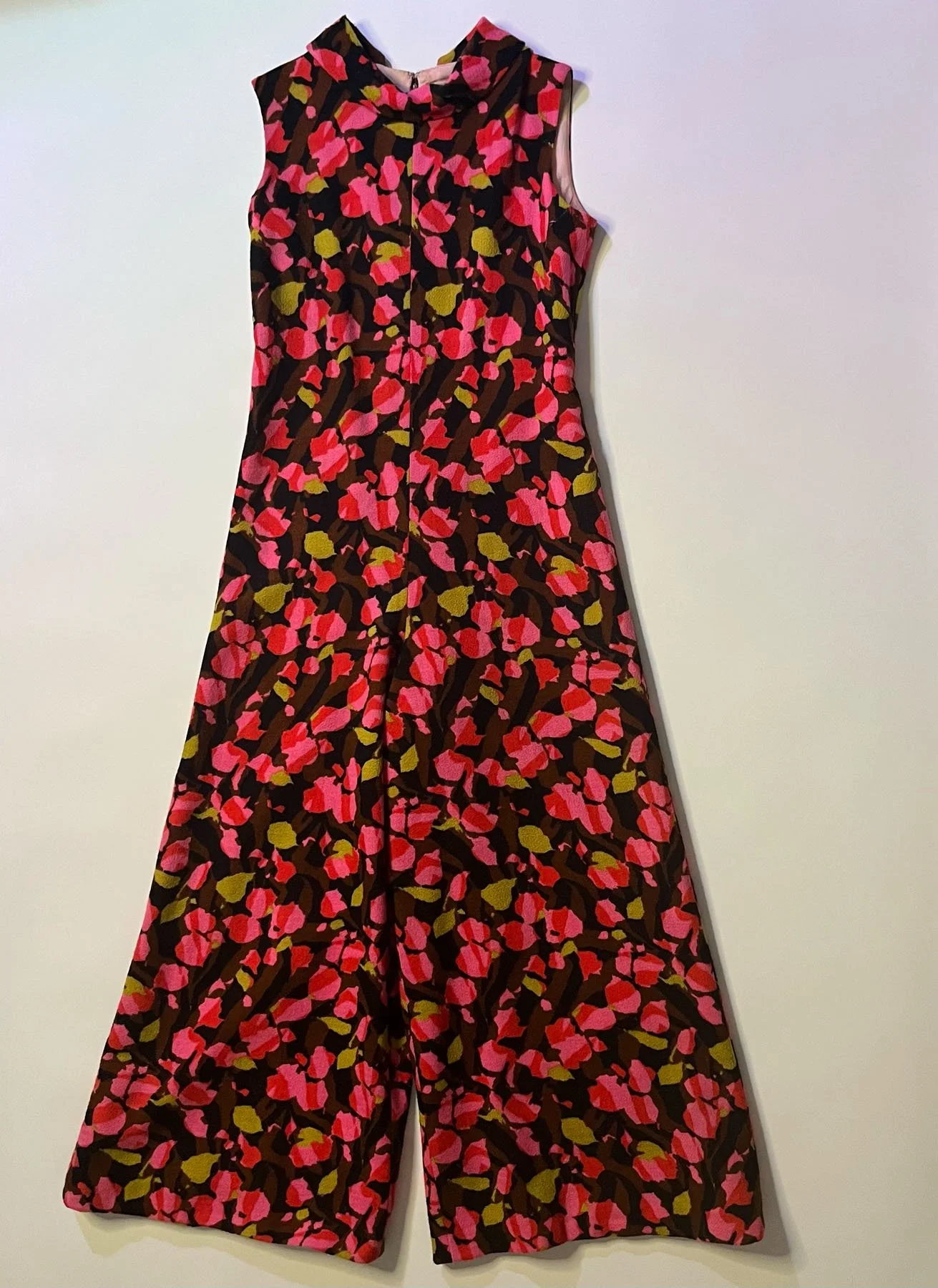
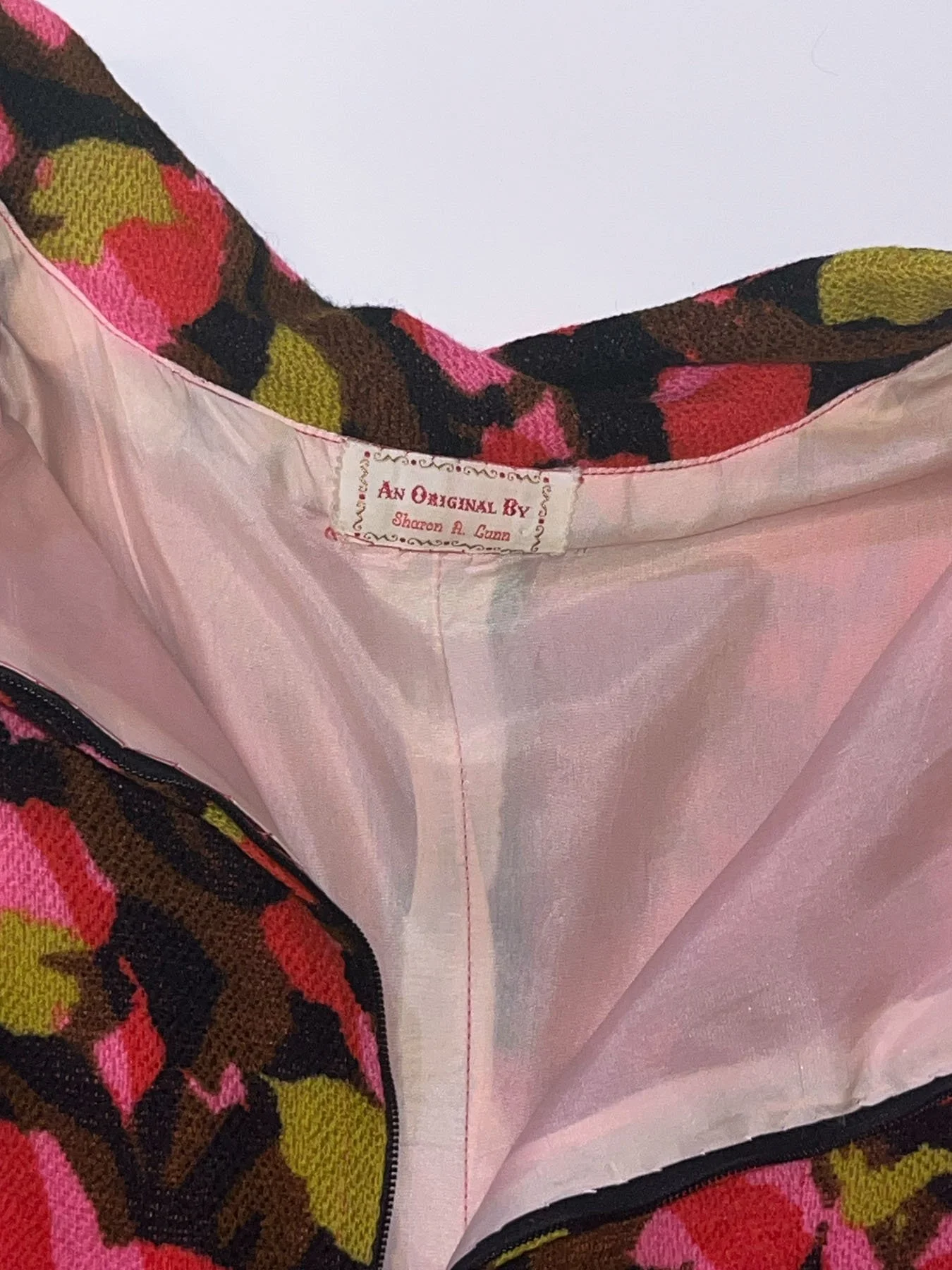
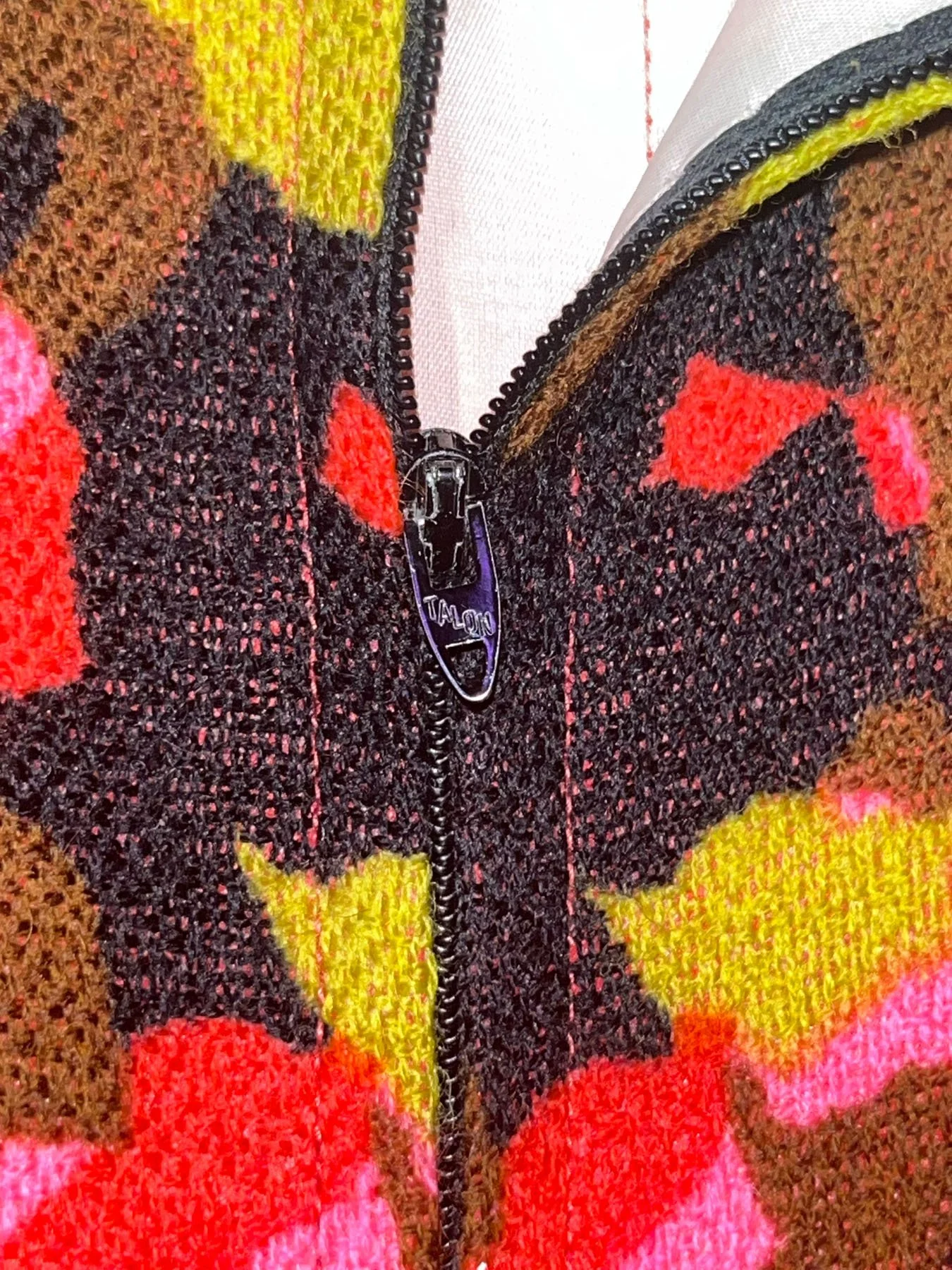
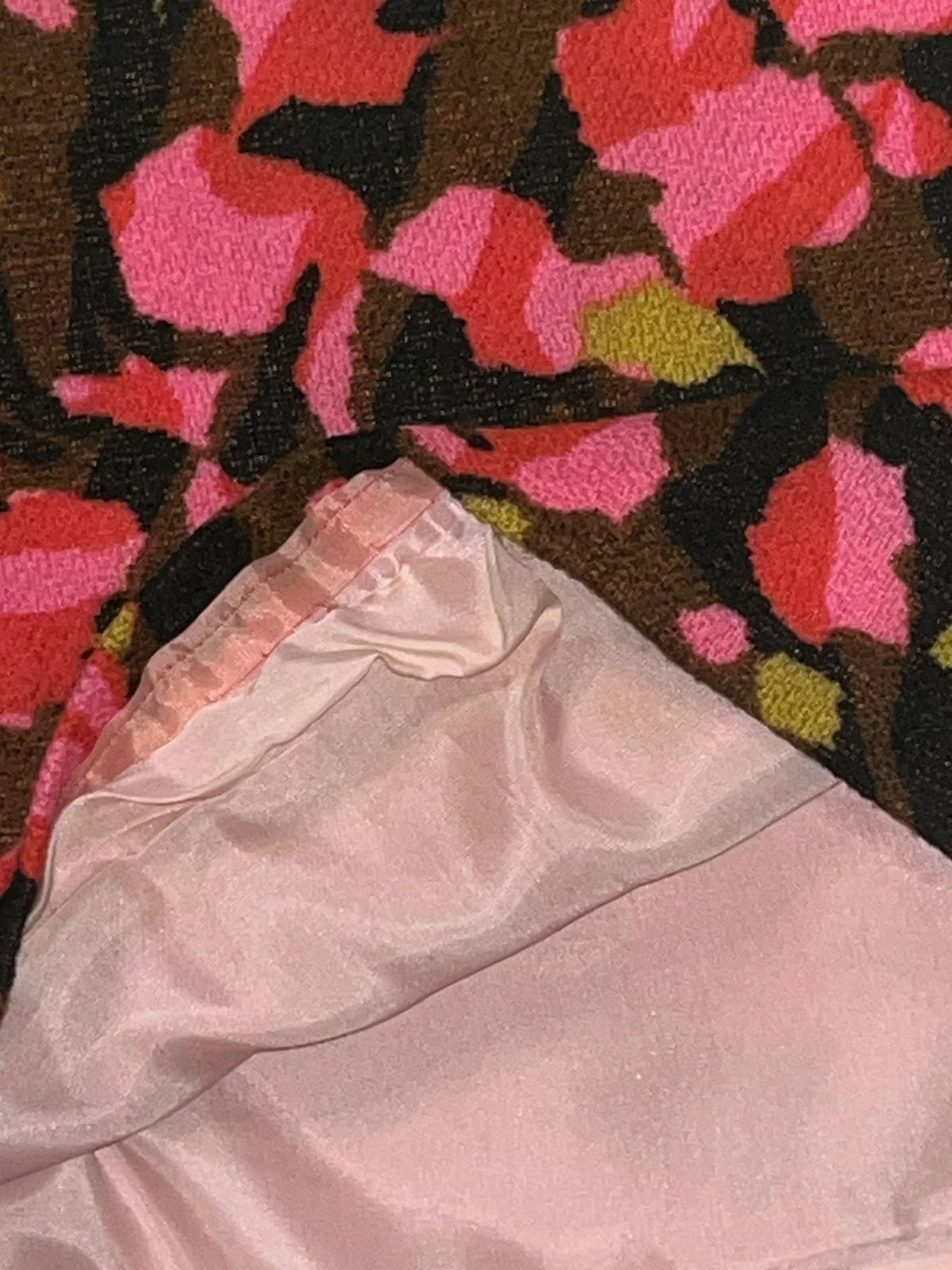
Wide-leg Palazzo jumpsuit. Sleeveless. Mock neck. Back zip. Fully lined. Hot pink, coral, red, olive, chocolate, brown abstract floral rose petals on a zebra print - that color palette could carbon date this on its own.
This one of the most specific color combinations in fashion history. It belongs to 1967 - 1972 and nowhere else. This isn't vibes - it’s pigment history. The psychedelic movement, mod fashion, Pucci, and Marimekko pushed exactly these saturated, clashing florals into production. See this palette? You're holding the late 1960s, babe.
The fabric is textured poly knit. Bold graphic prints on knit became a trend in the late 1960s because the technology was advancing, and women wanted comfort and drama. This piece is fully lined and delivers both. The zipper is Talon, which dominated the American zipper manufacturing through the 50s and 60s, then collapsed in the late 1960s and early 70s when YKK (Japanese) swept in.
The lining is sewn with a neon pink thread. Sharon knew what she was doing, and the interior is very well finished. My grandmother and great grandmother both used similar tags to brand their items. It's a calling card, and I'm trying to find Sharon to this day. Again, care labels were not mandated by federal law until 1971. I purchased this item from a collector and to be expected it had a few holes.
1970s diamond Intarsia cardigan, c.1970s
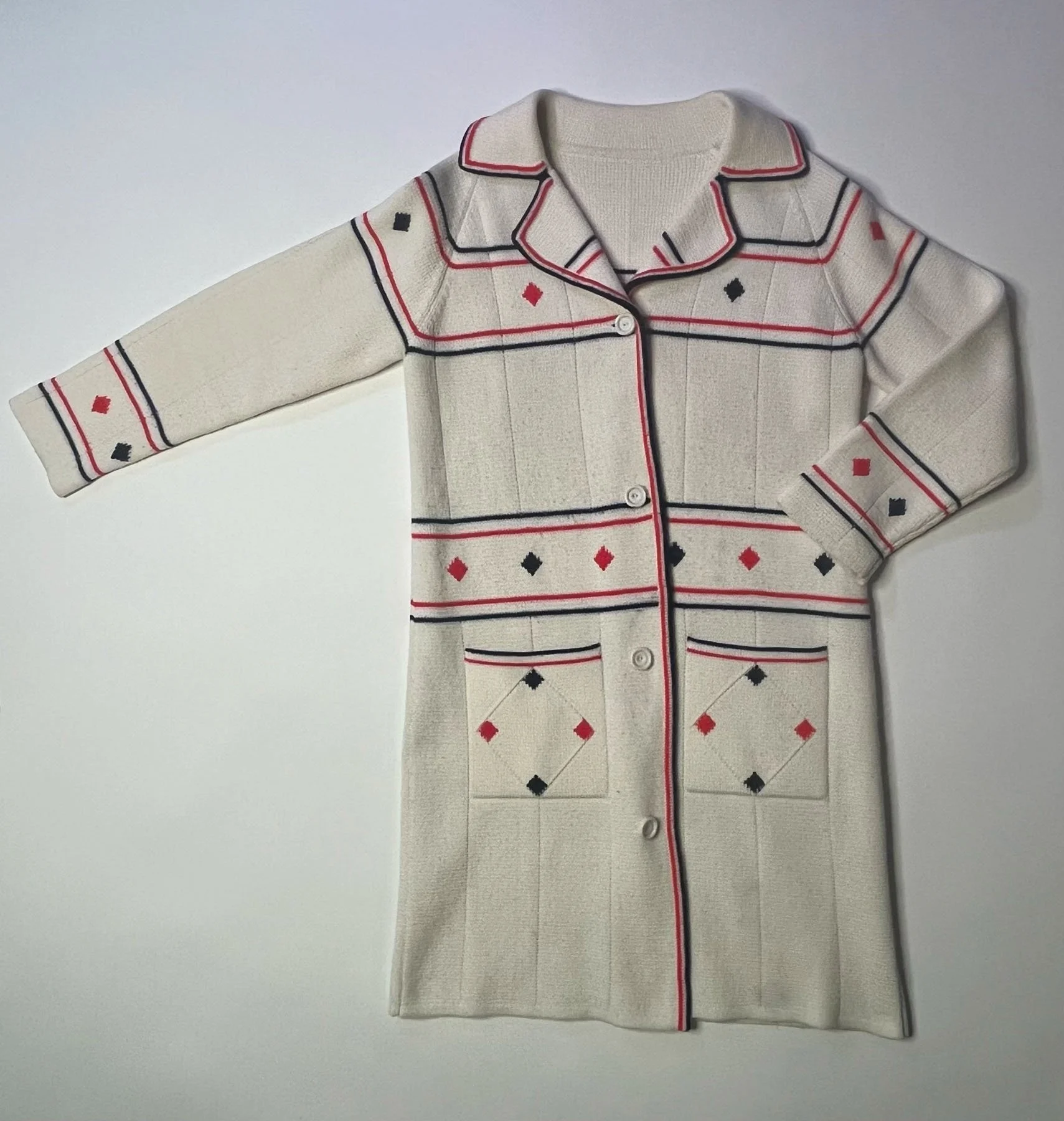
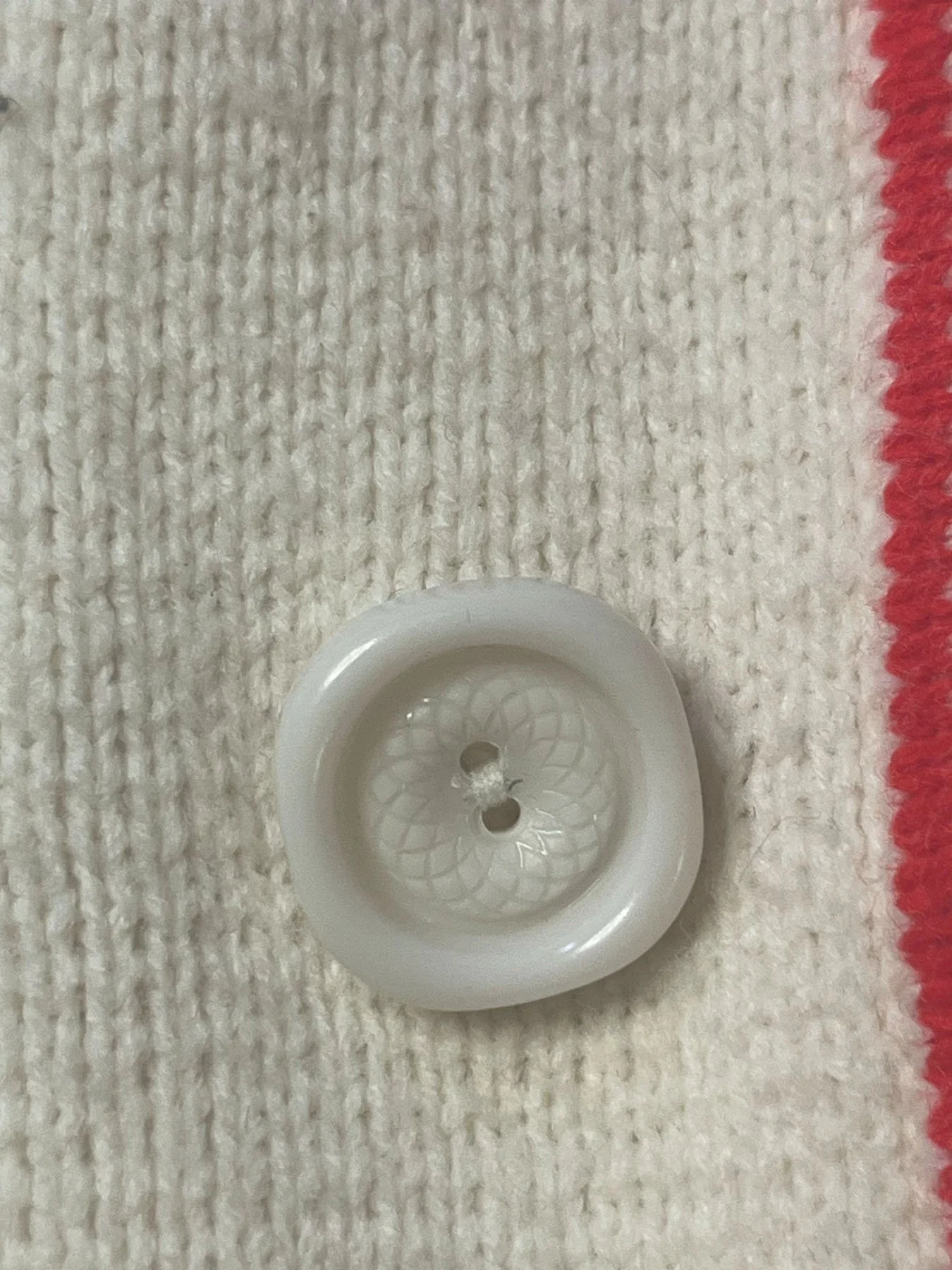
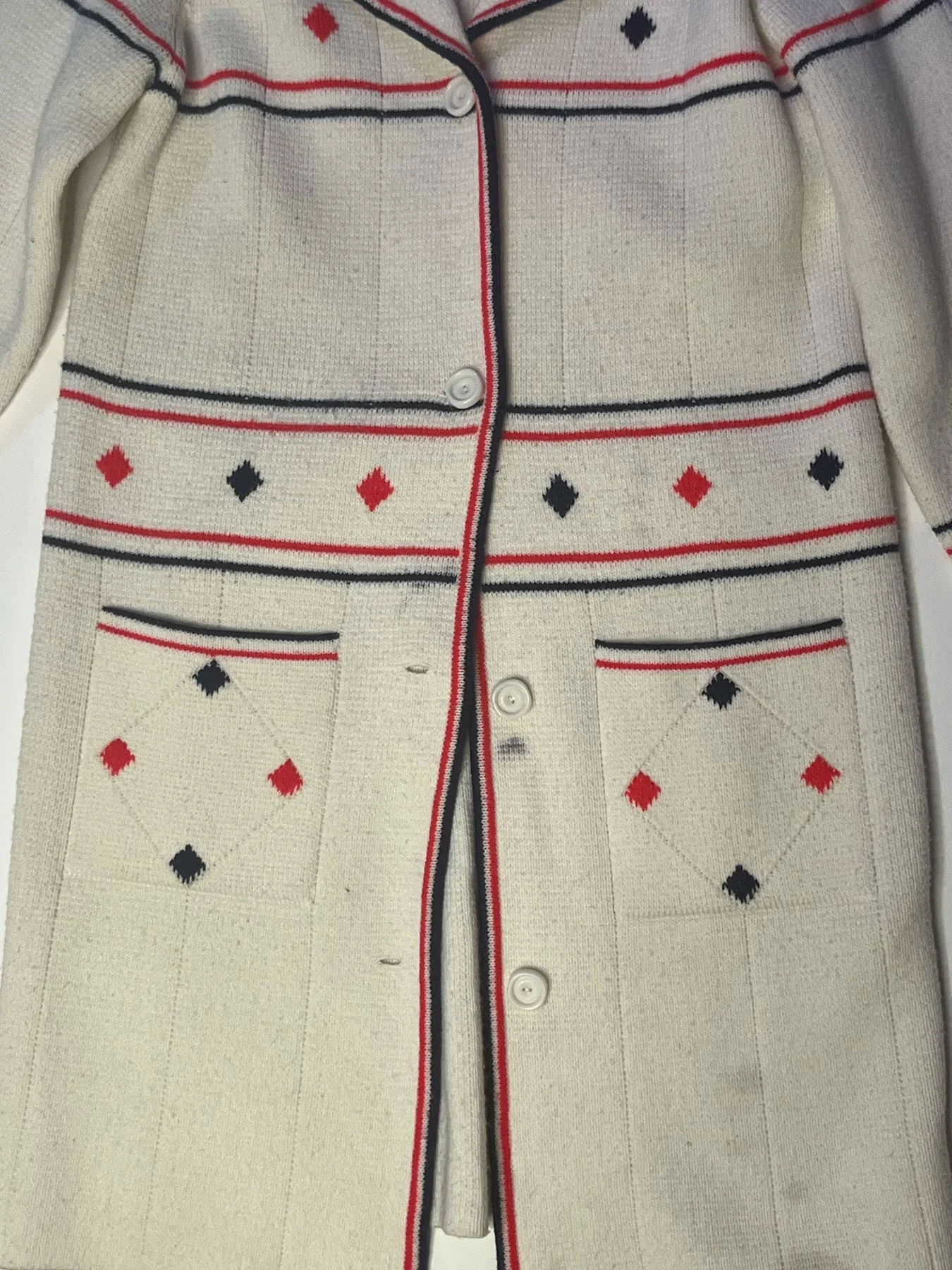
Machine knit, acrylic shift, silhouette straight and relaxed. This is a cut that screams late 70s. The design is a fiery red, navy, diamonds on a long, cream cardigan with an intarsia pattern. When researching this piece I was able to find several similar items, buy none as well finished as this. The architecture and consistency of the diamond pattern indicate that it was manufactured on industrial machinery. There's no label, but it's definitely post-1971. Removed or cut-out labels in this era are often times from the jobber systems marketplace, which dominated the garment district in the 1970s. Santee alley and surrounding blocks functioned as a massive surplus pipeline. When manufacturers overproduced, had order cancellations, or garments rejected for minor issues such as a wrong dye shade or a slight mis-cut they sold inventory to jobbers at steep discounts.
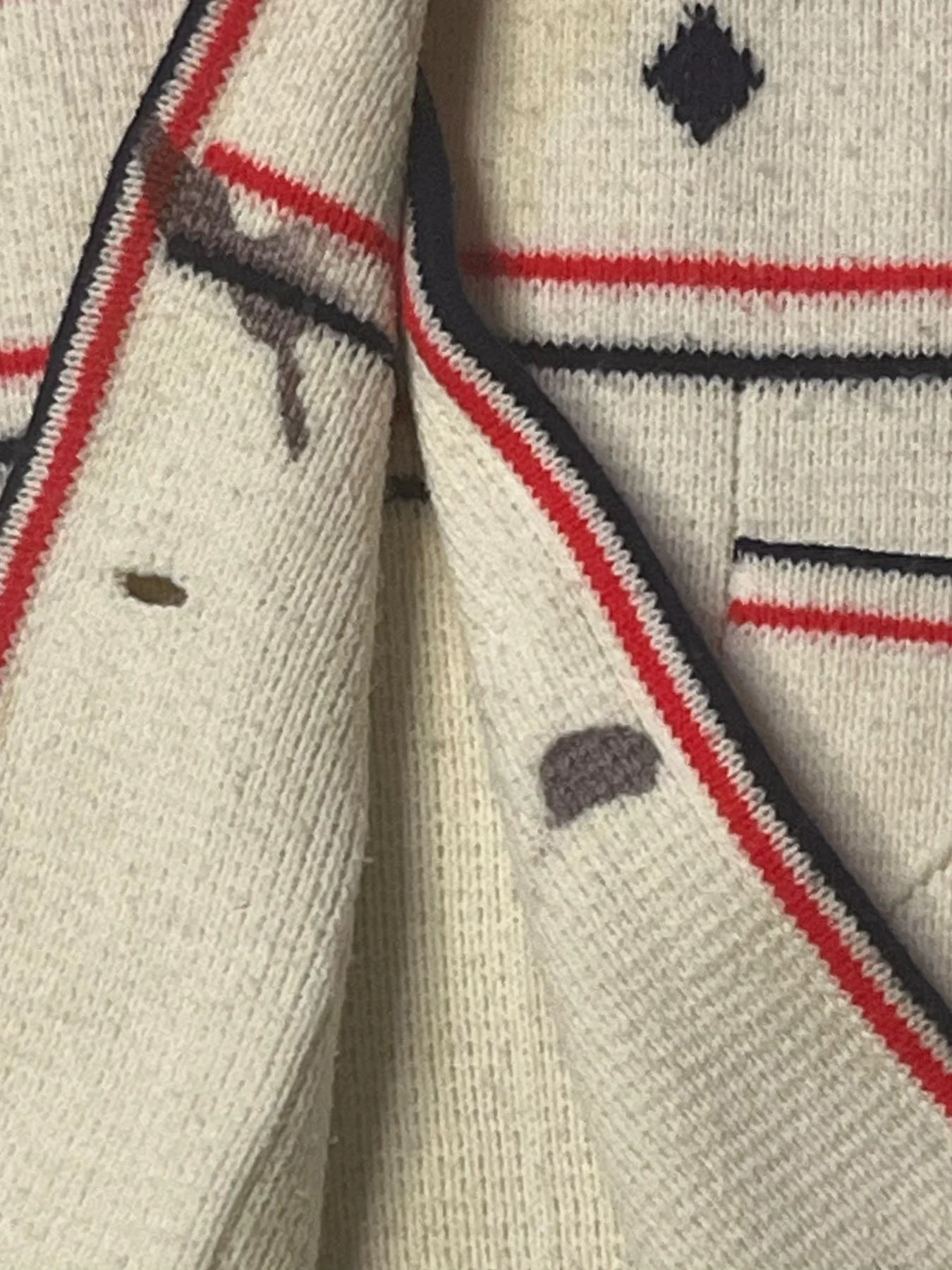
This item does have the original buttons as well as a spare sewn in on the interior, and you'll notice a Jolly Rancher-colored stain on the inside. I worked a bit at getting the stain out. A lot of times, people will discard things that they feel are imperfect, and most of the time, I find they can be repaired or given a little TLC.
Norma Kamali dress c. 1980s
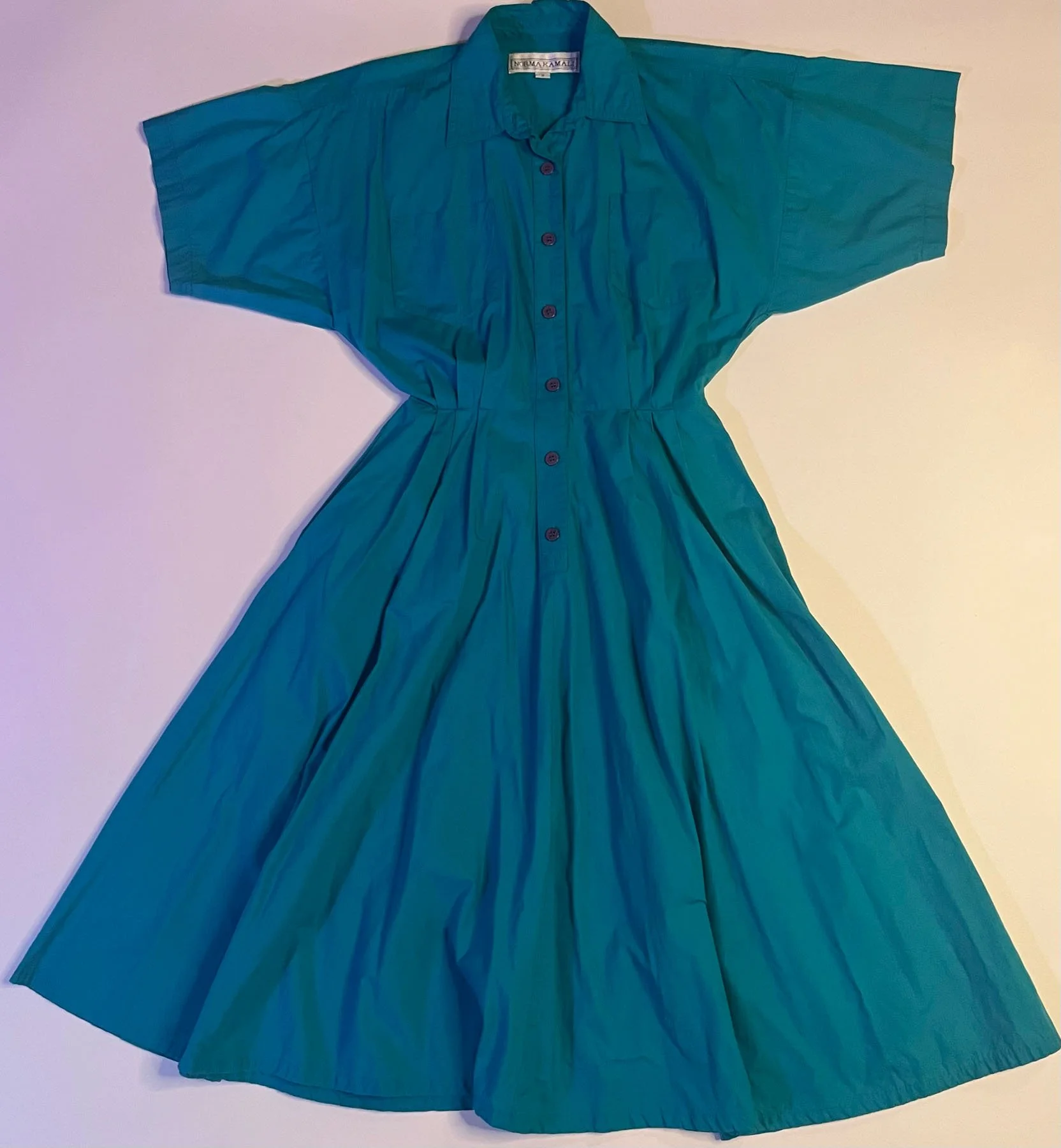
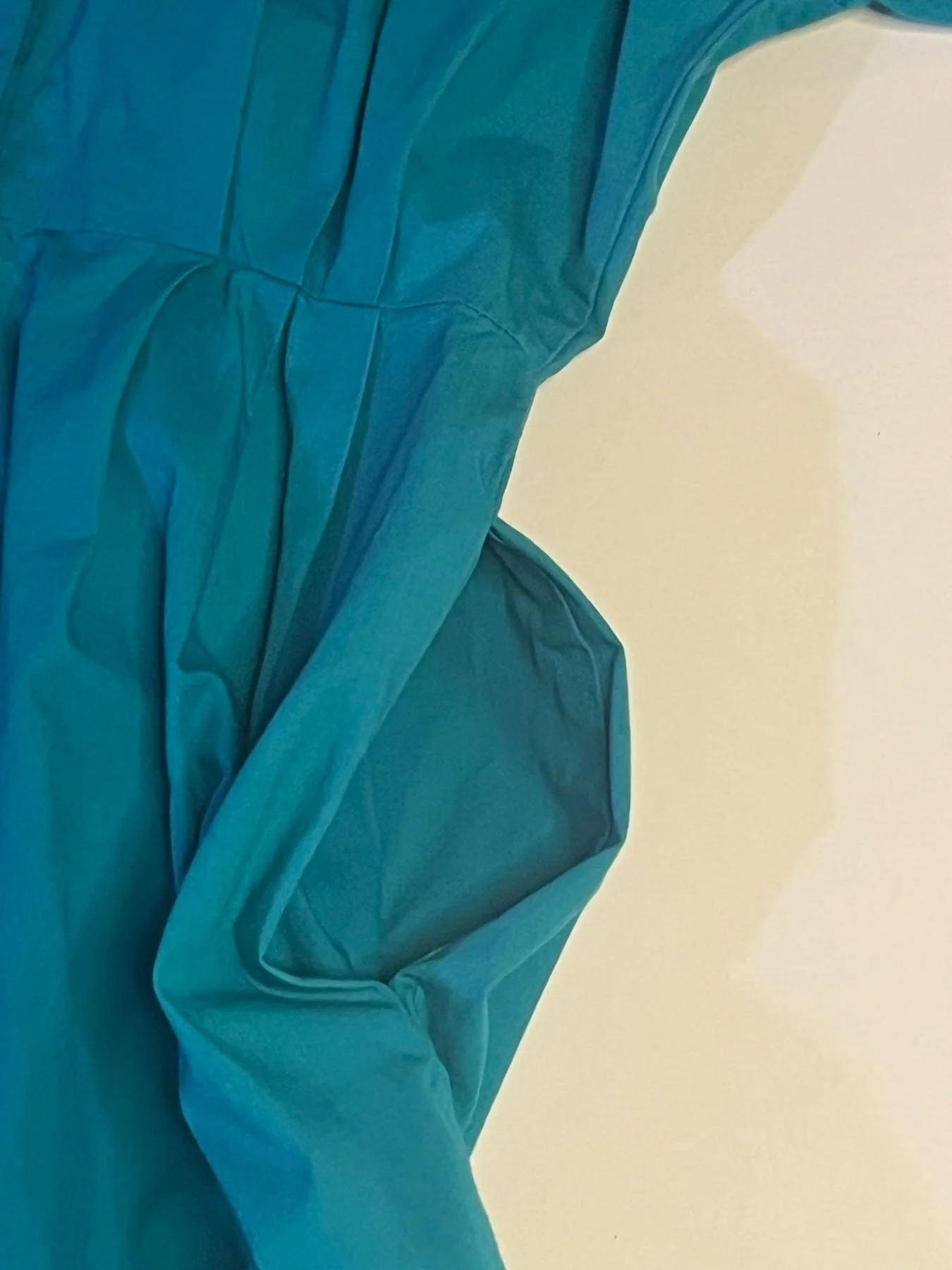
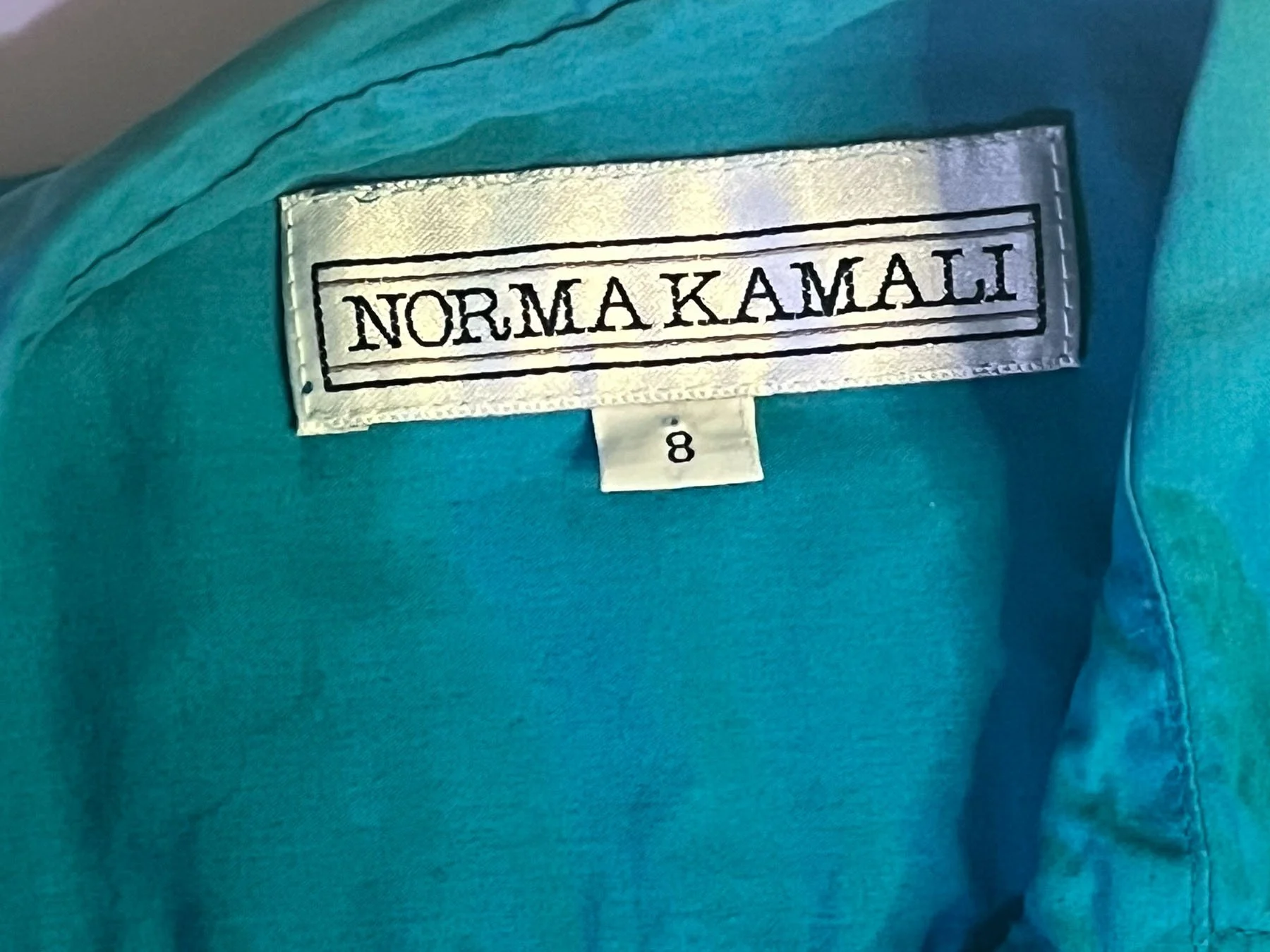
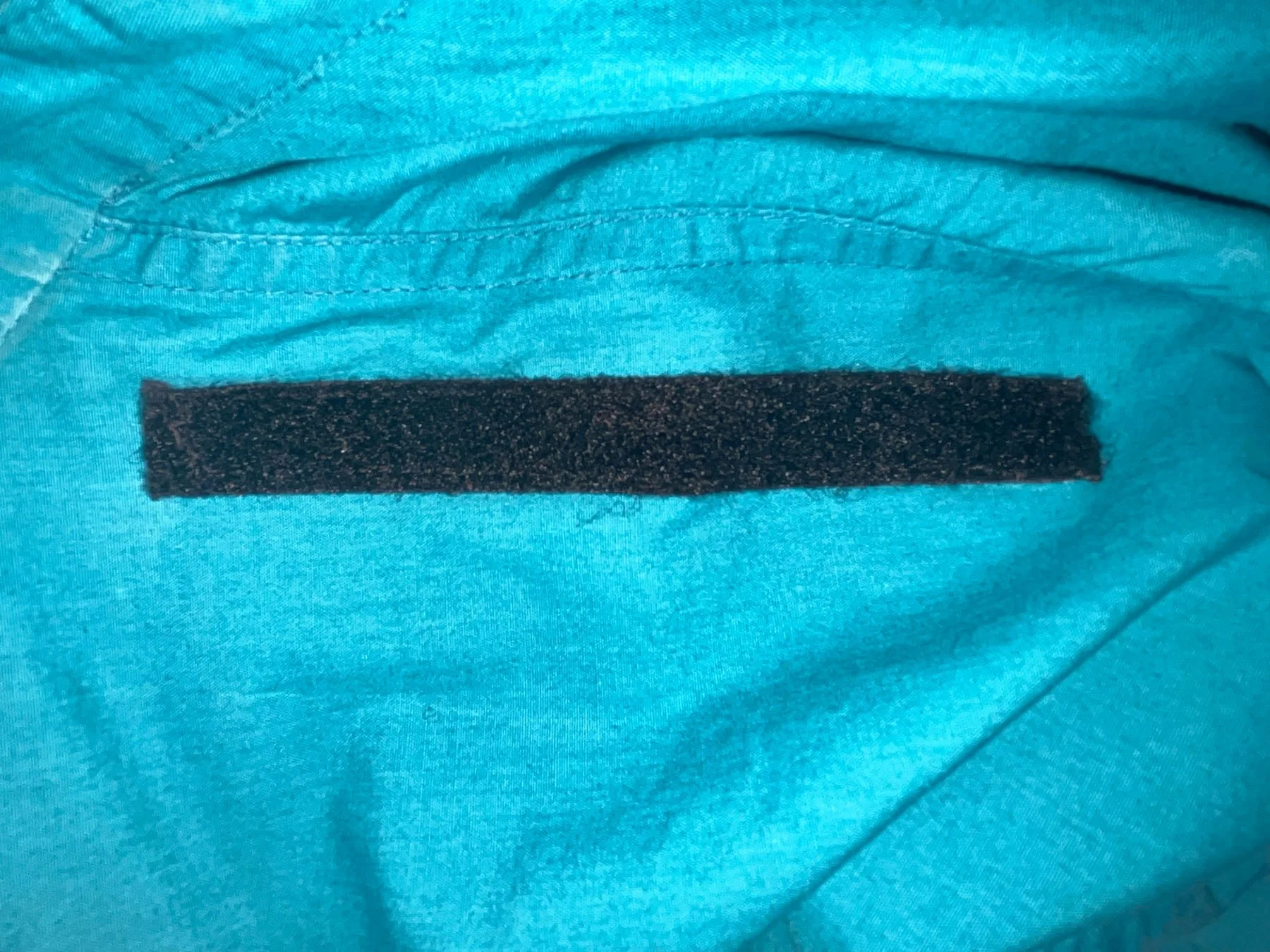
Size 8, teal cotton with pleats on the front and back. This dress has architectural precision. It's also functional with pockets on the chest and skirt. There is Velcro sewn into the liner of the shoulders for what I imagine would've been removable shoulder pads, which were missing from the item - that's fine, I don't need them. This is a 1980s designer construction and details actually served the consumer. The pleating alone tells you this was made by someone who understood structure and fabric. Very on brand for Norma Kamali. When you recognize what you’re holding you stop shopping on impulse. This dress reminded me of something my grandmother Jane would wear and so I decided I should wear it too. That’s legacy, baby!
Bivache Blouse (Kanto Group) c. 1980s
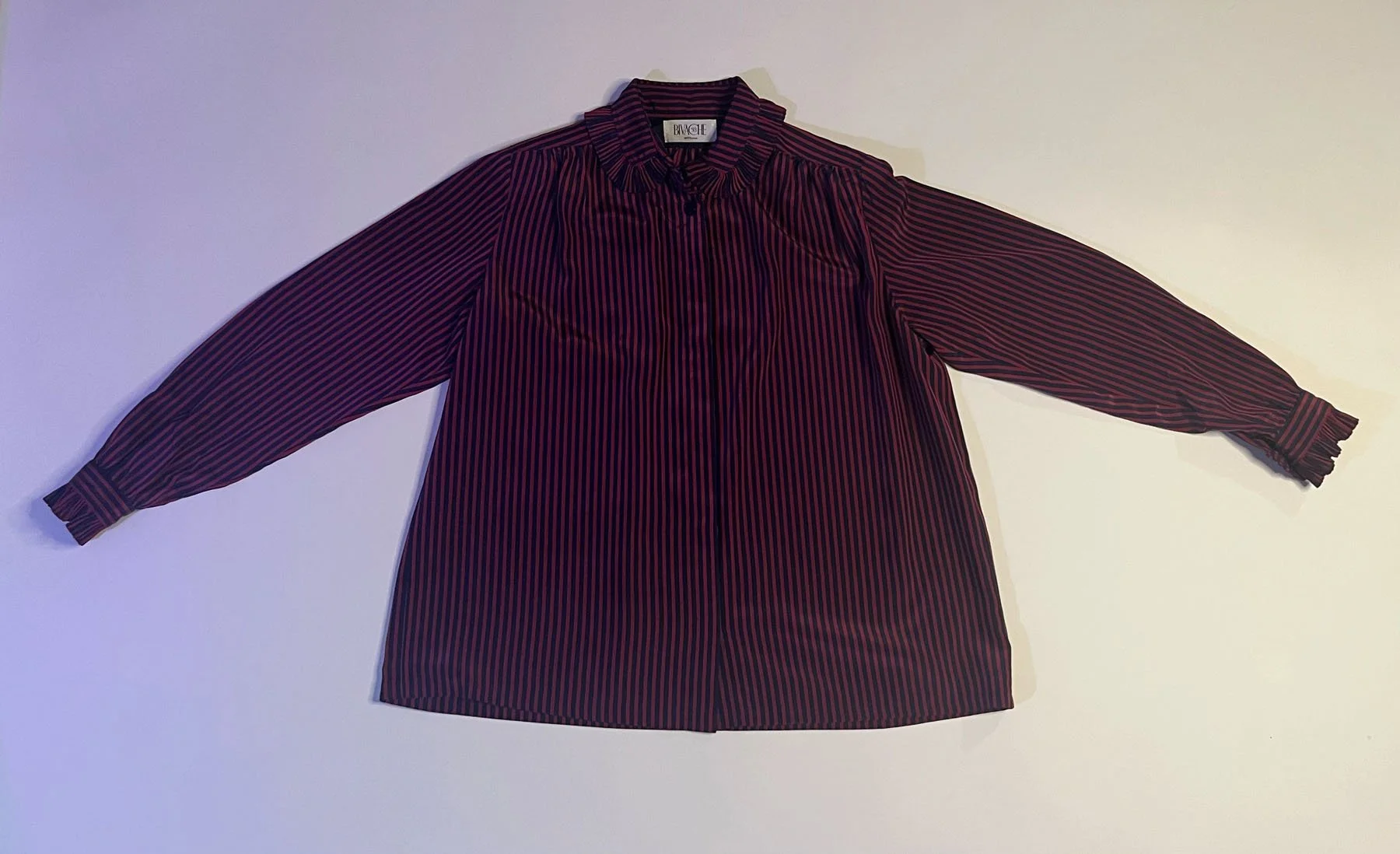
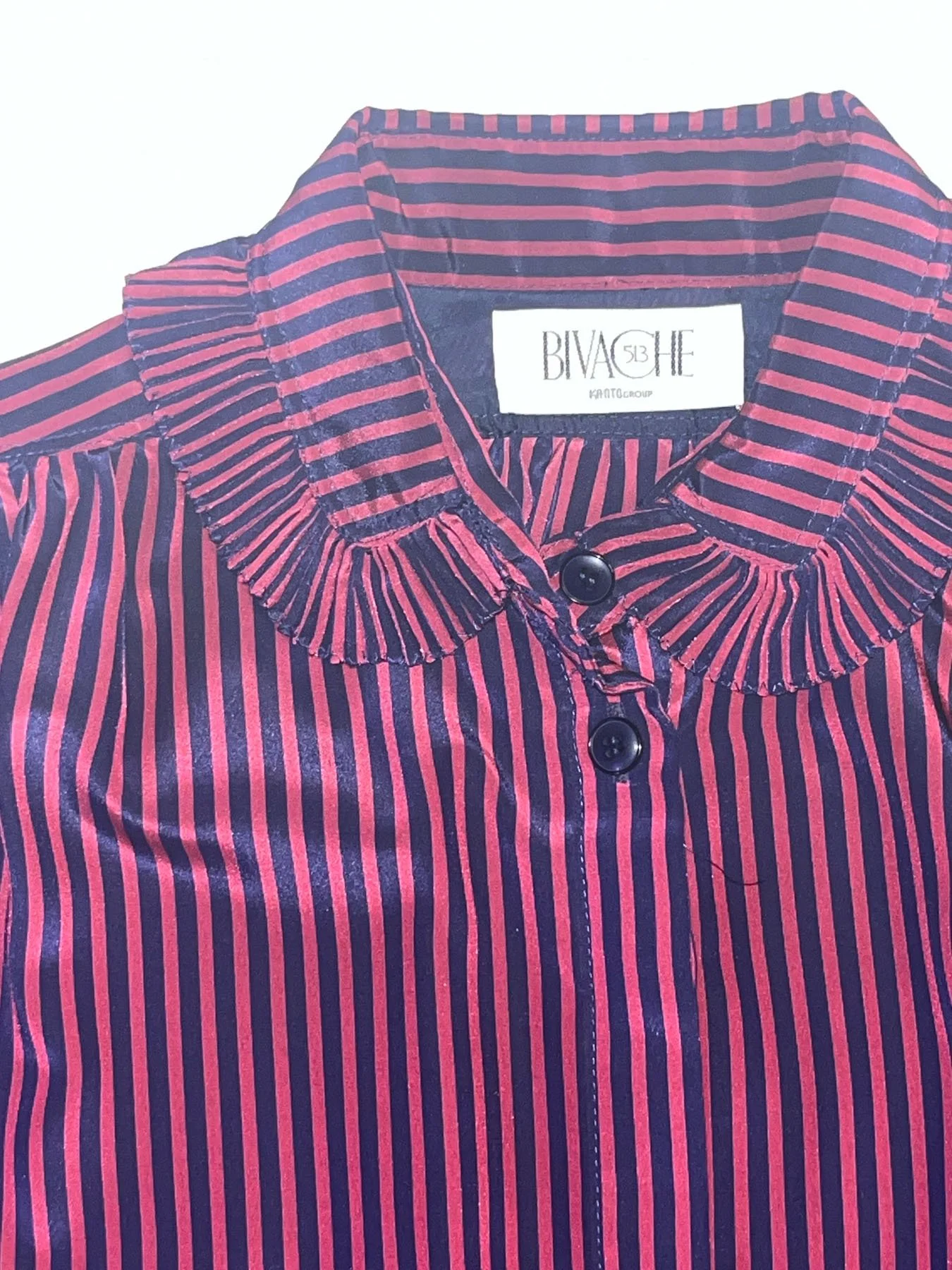
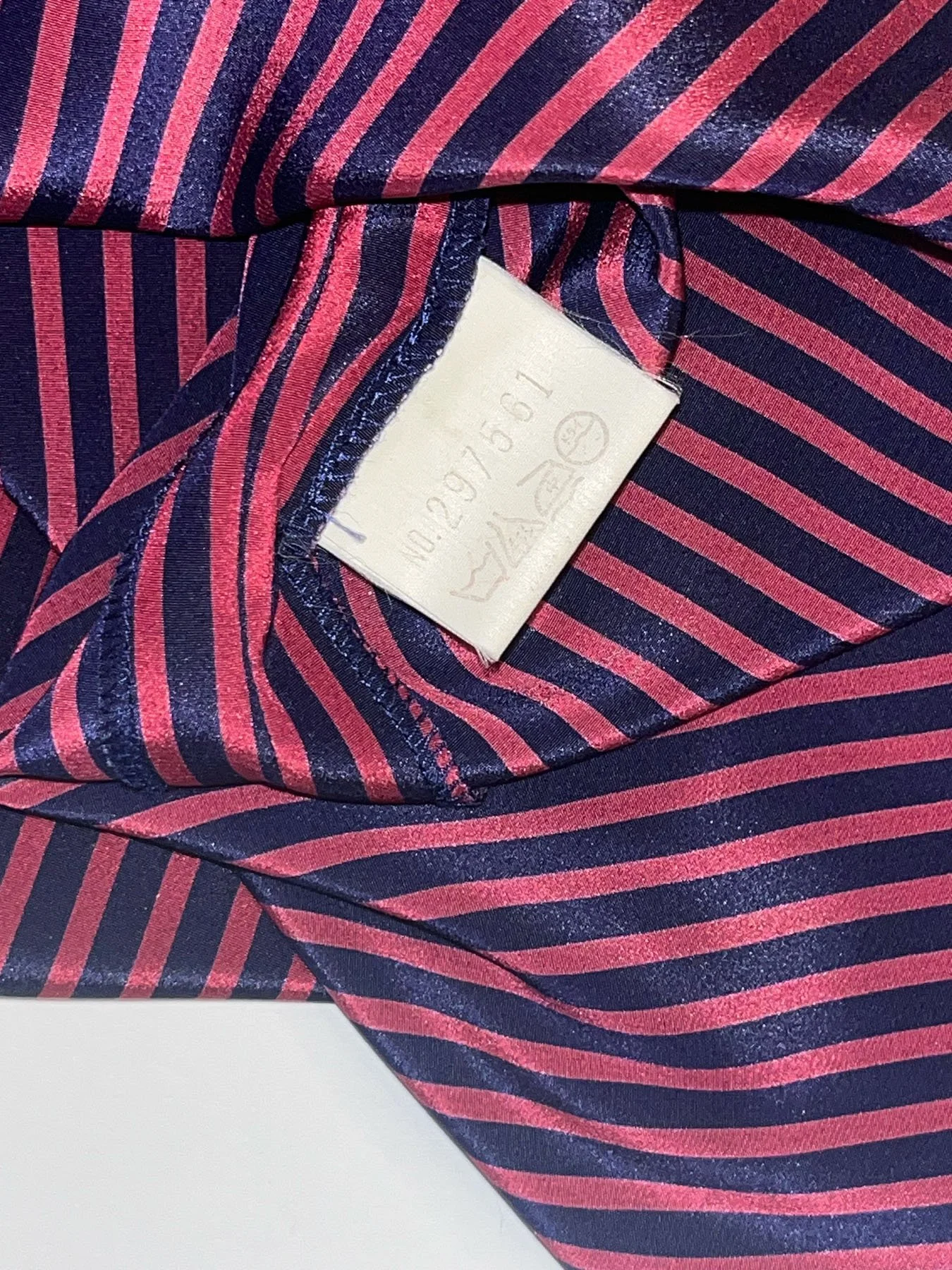
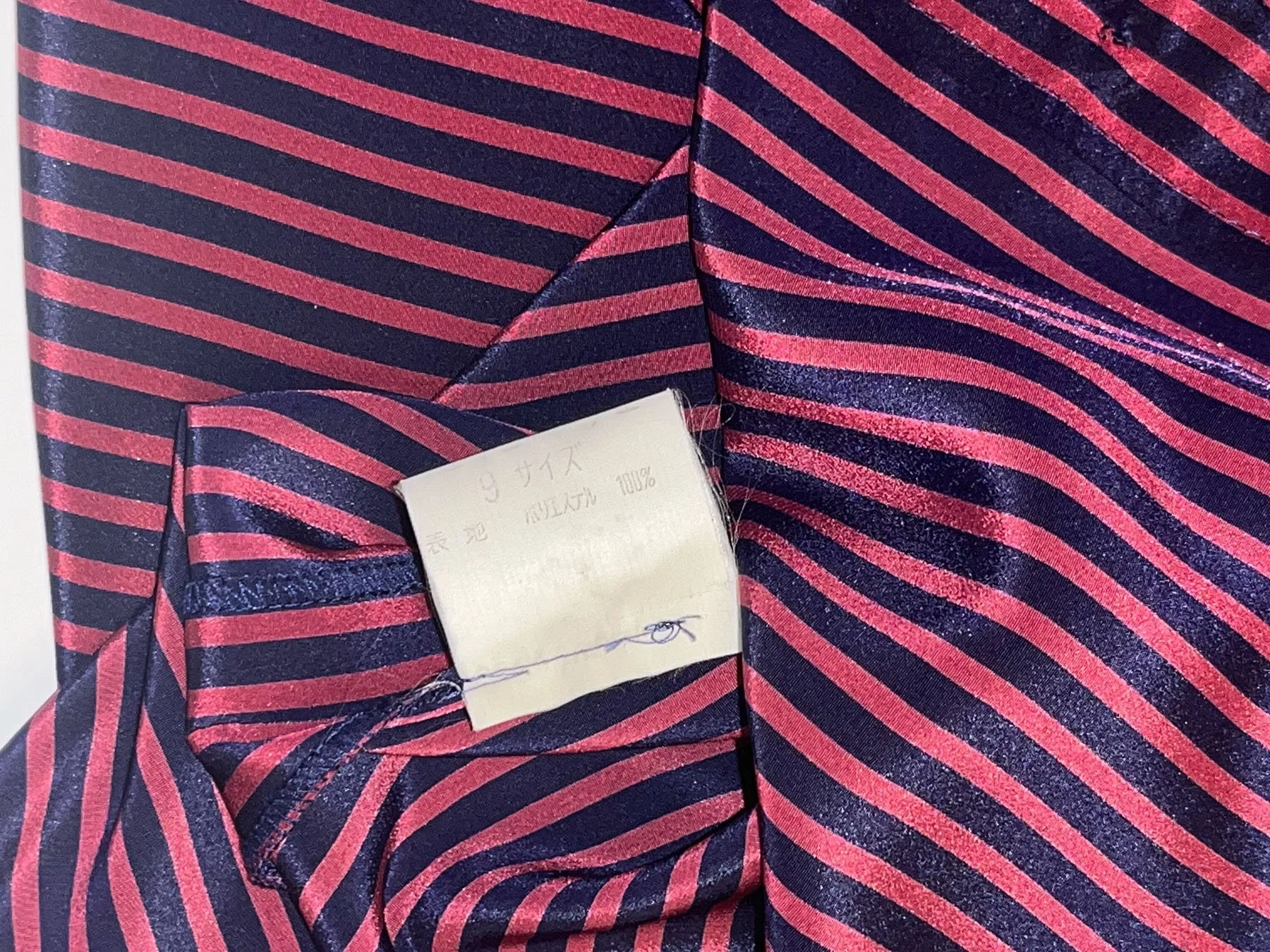
Japanese care tag, 100% polyester, shoulder pads, pleated trim, candy stripe. The tag tells you everything: Bivache by Kanto Group. This is a rare label most people won't recognize it; that's the point. In the 1980s Japanese clothing manufacturing for the American market shifted from low-cost production to high-end avant-garde fashion and premium Americana revival.
Georgiou Studio Coat c. 1990s
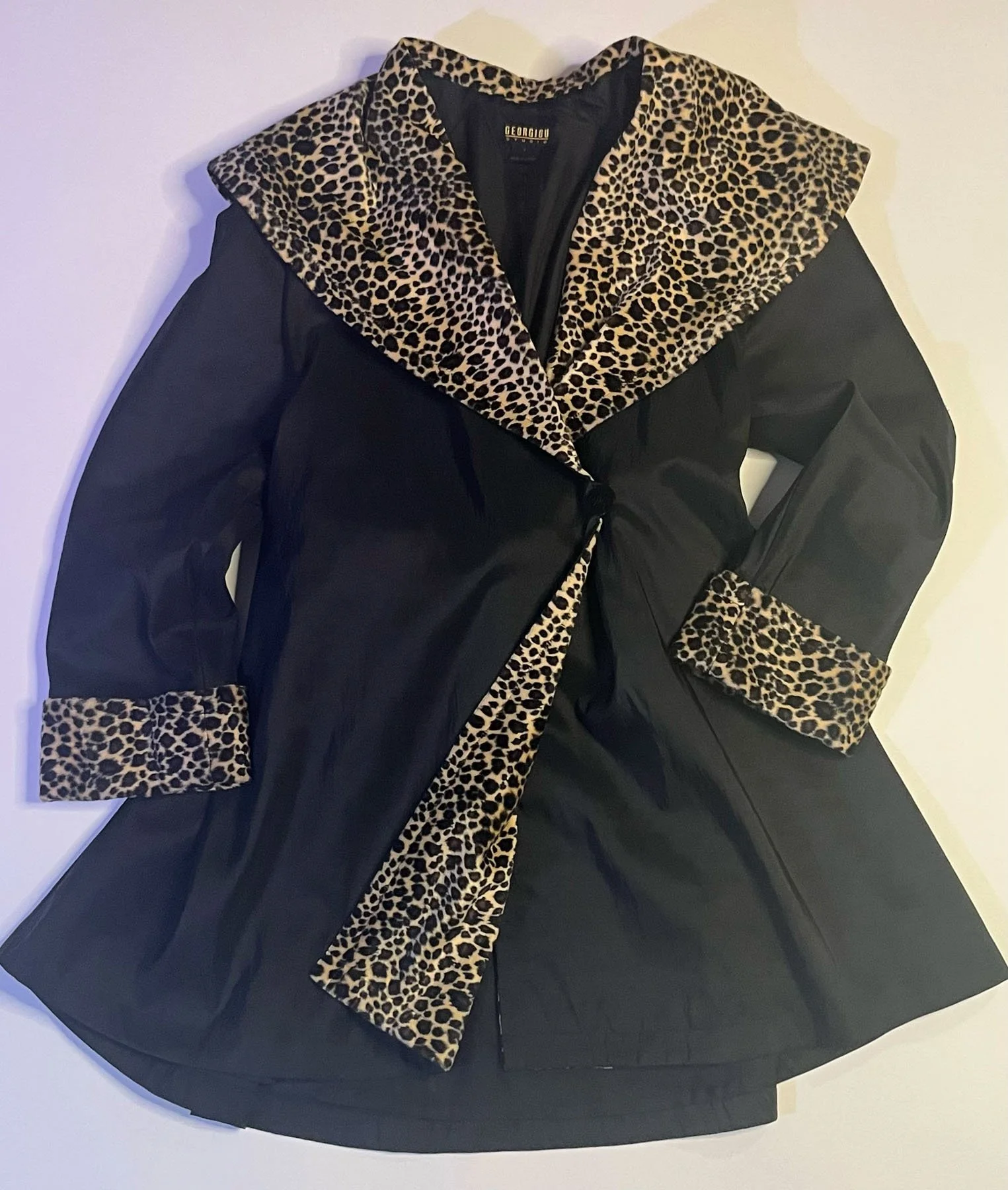
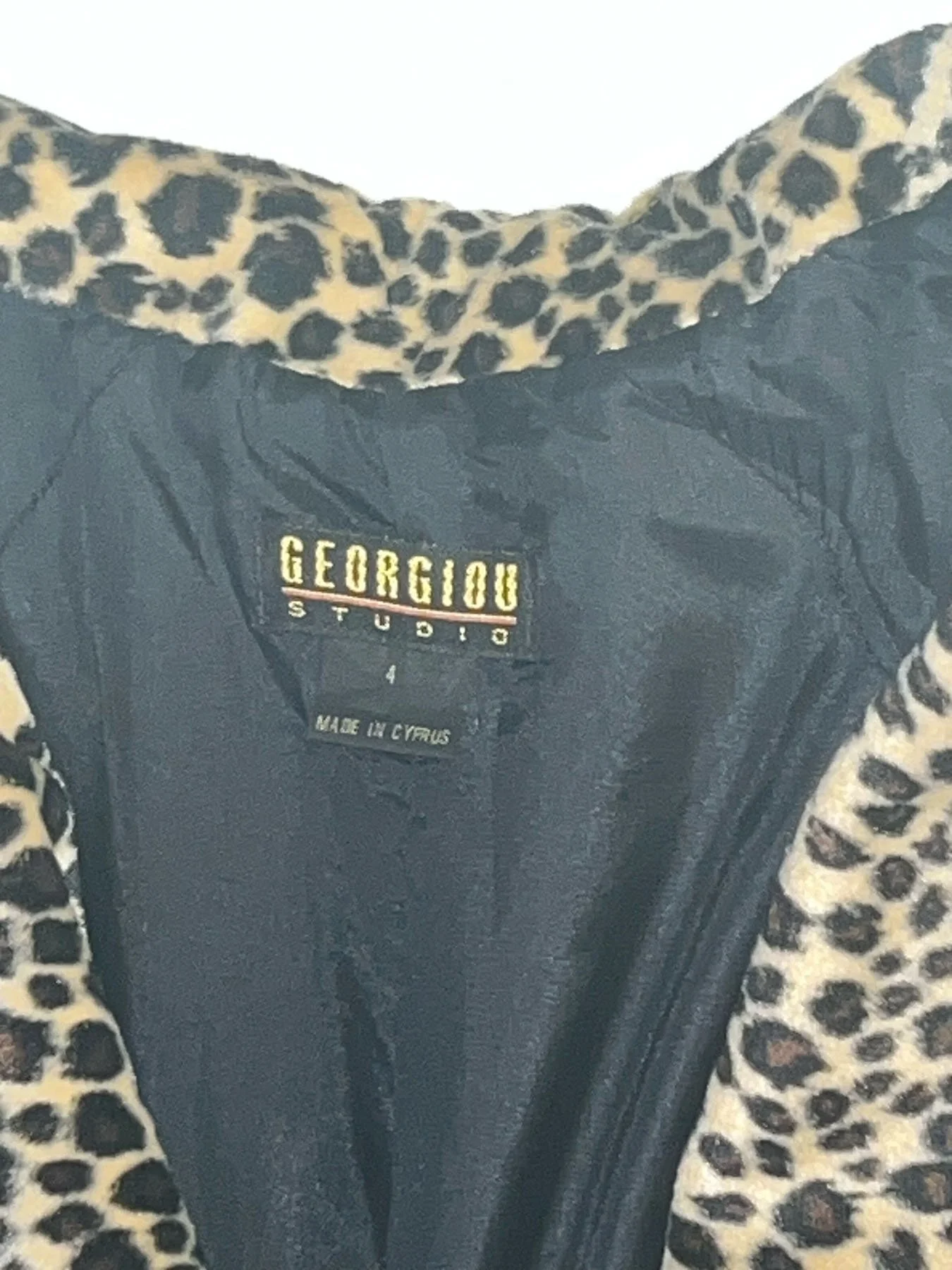
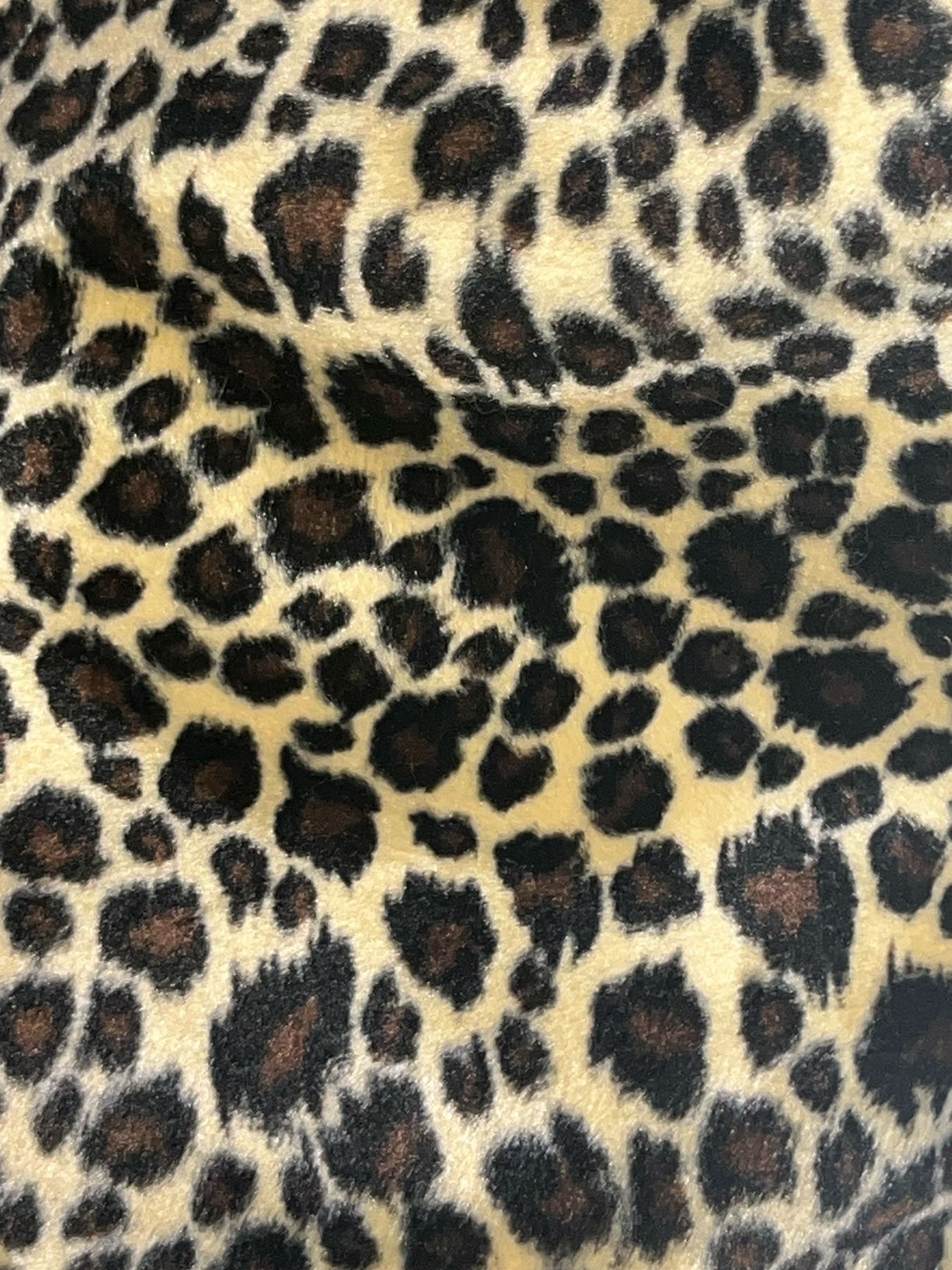
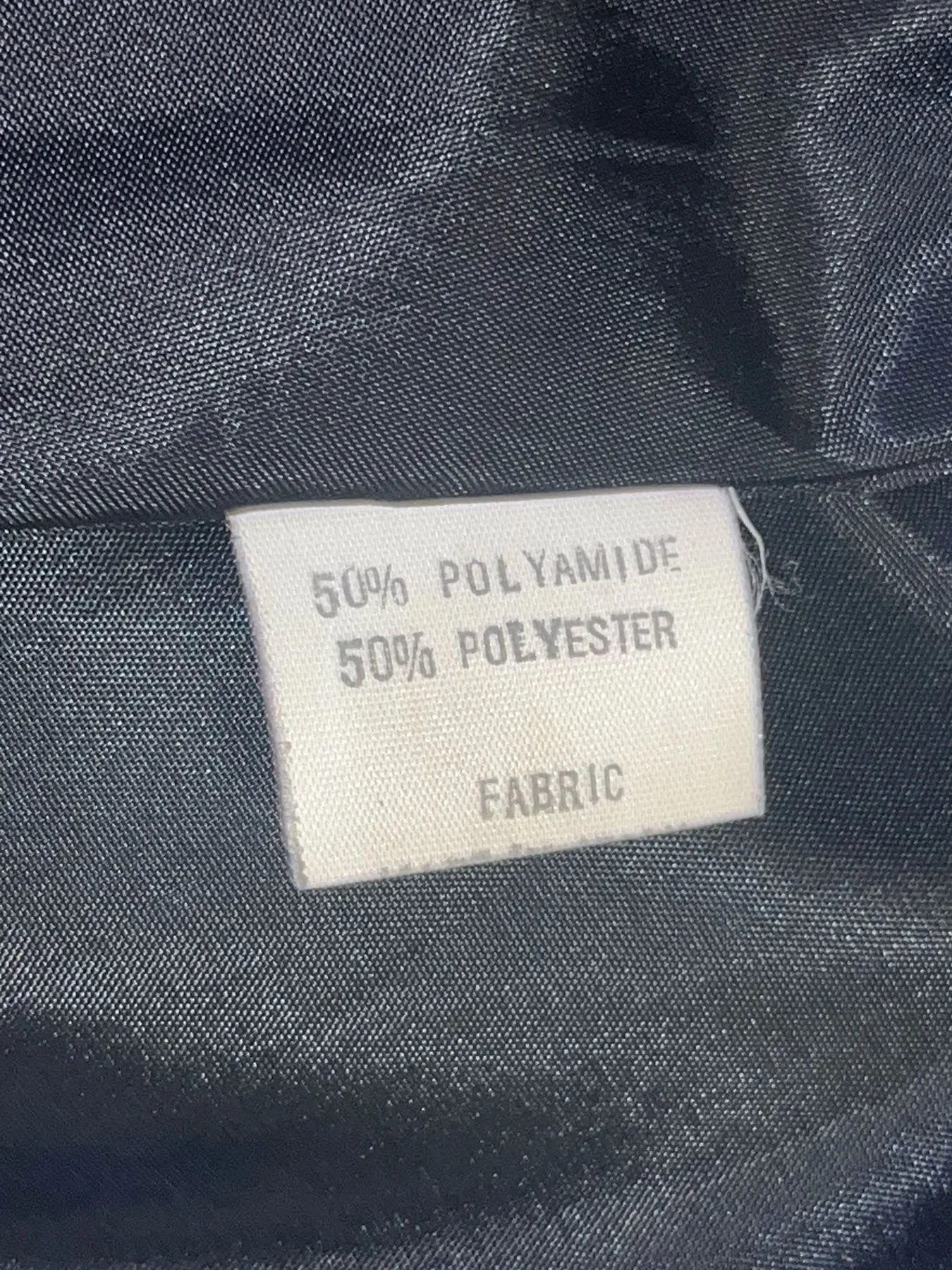
This item was dated based on purely on context. It was manufactured at a time when most clothing was made from fabrics purchased from fabric markets. This is pre-fast fashion. In my 20+ years of shopping, I have found various leopard print items that utilized this exact fabric. Understanding the eras of different fibers is a fantastic dating tool. The tag indicates that it was made in Cyprus.
CLIO Petites Black Leggings c. 1990s
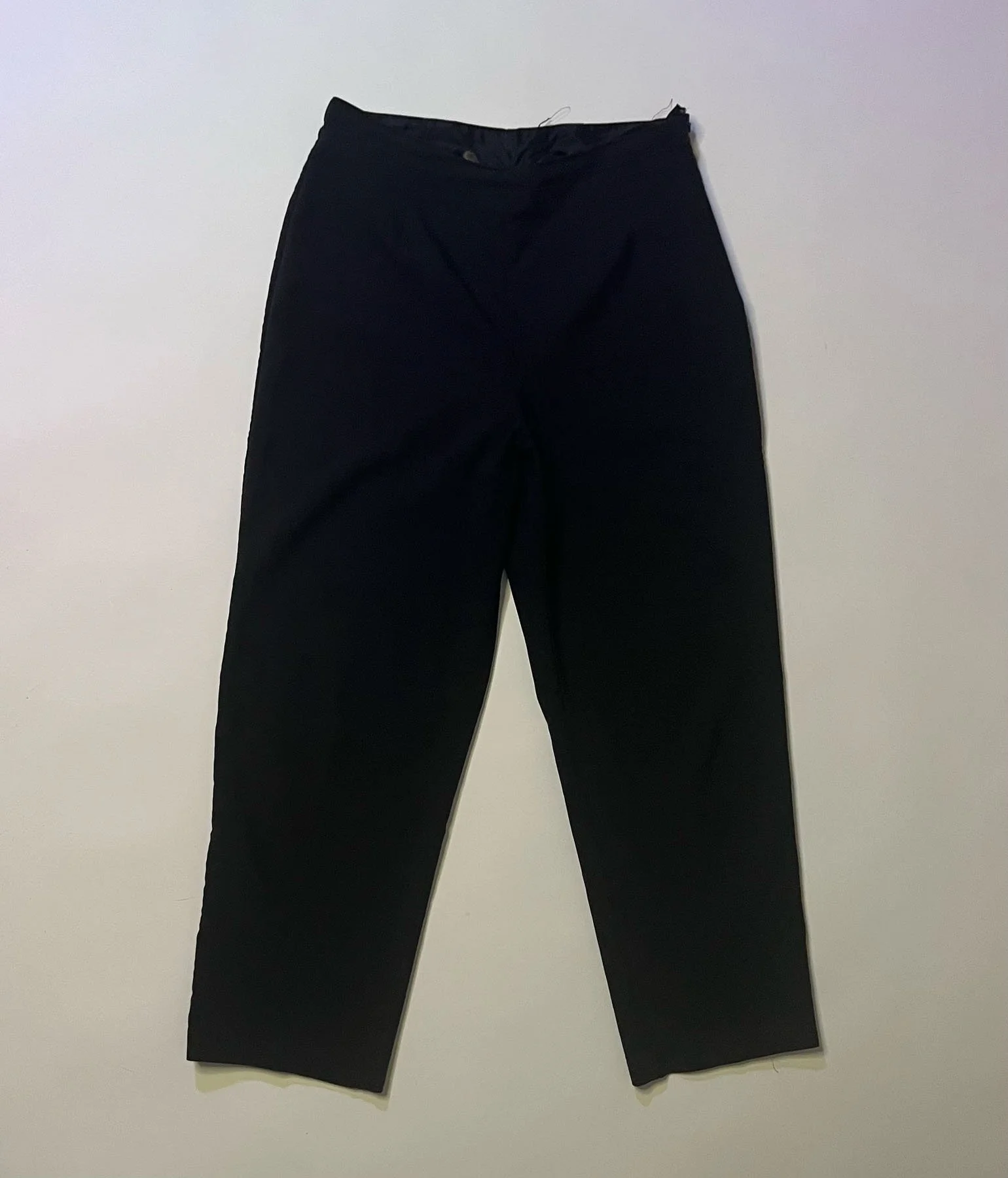
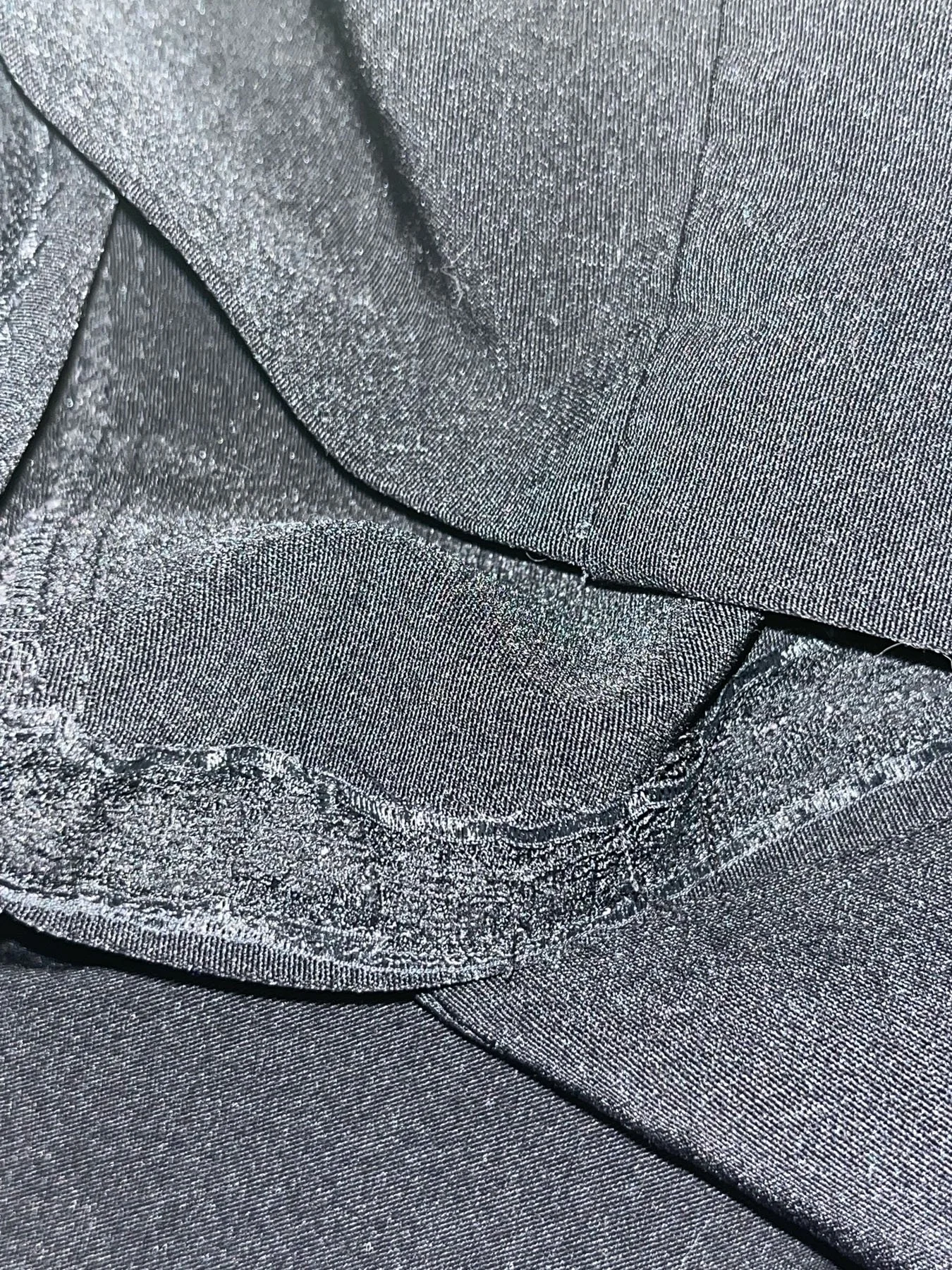
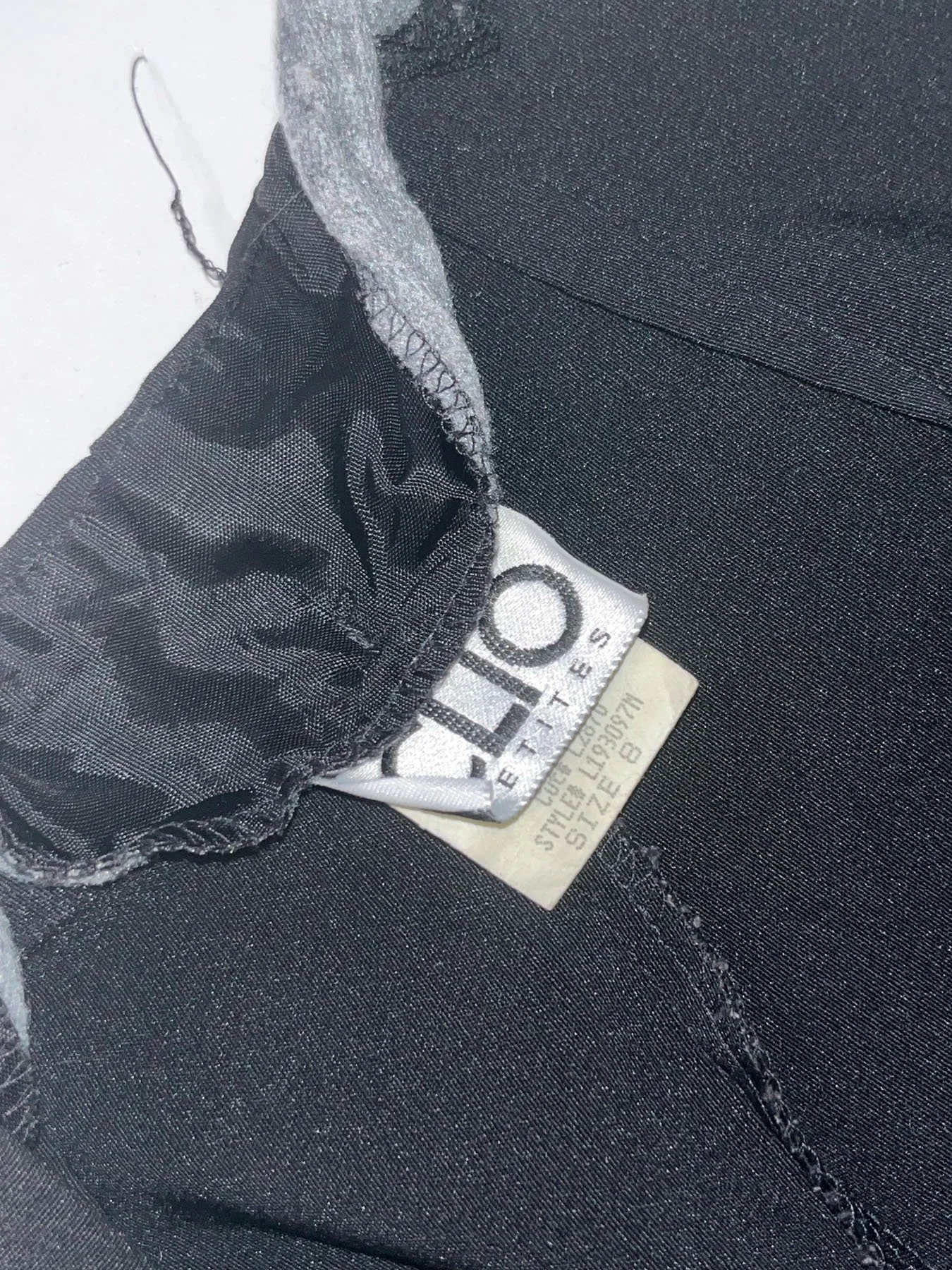
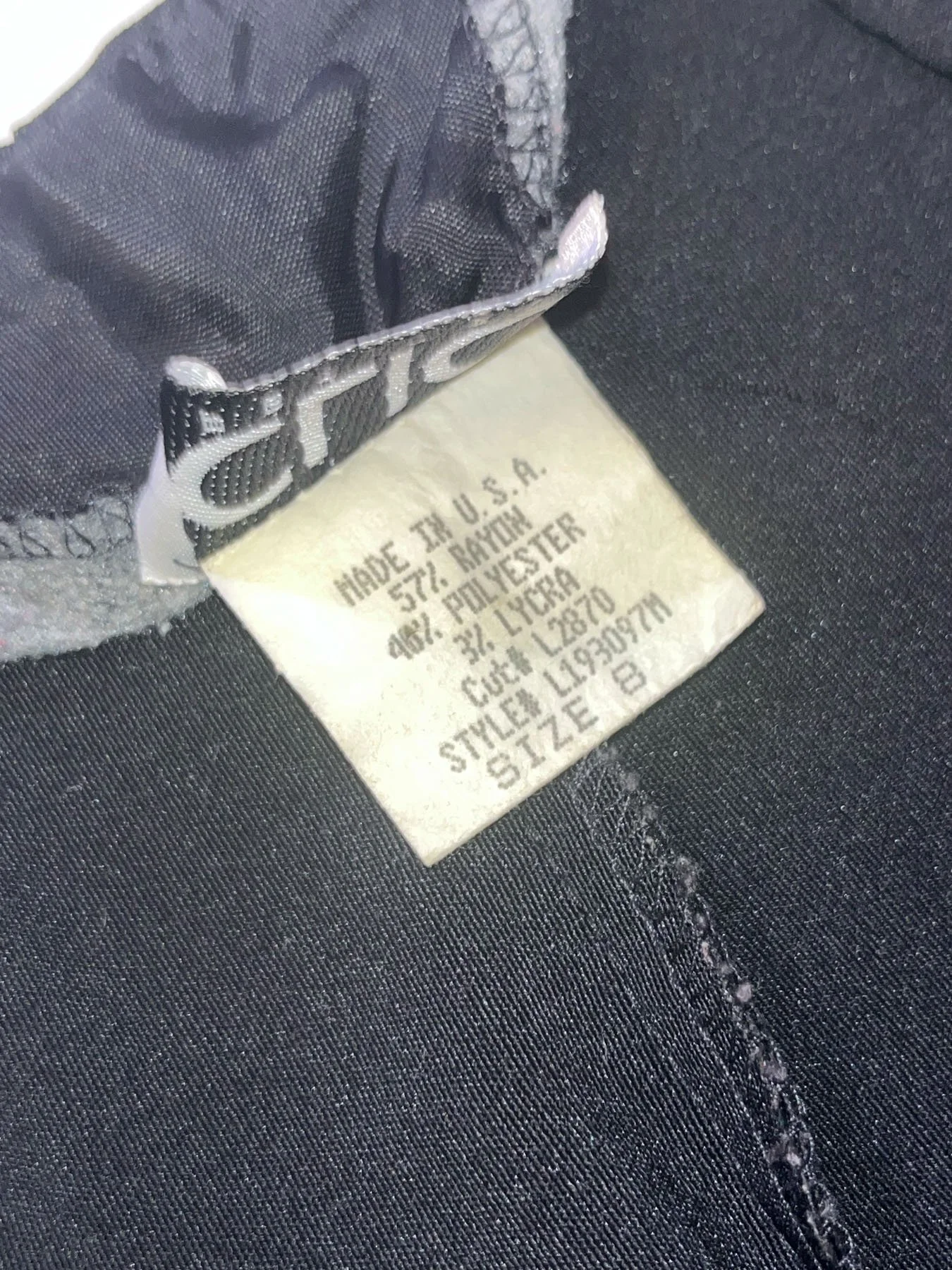
CLIO petite was a small American women's label targeting the petite market that had its own sizing and infrastructure in the 80s and 90s, though it's largely collapsed into vanity sizing. These are 1990s-made-in-America stretch trousers. They're wearing their age and the degradation of elastic on the interior is right on time. Something that stood out to me about this item during my inspection was that they have French hem. This is one of my favorite details to find in vintage as it often indicates mid century or a hand made item. I believe that someone’s grandmother hemmed these trousers.